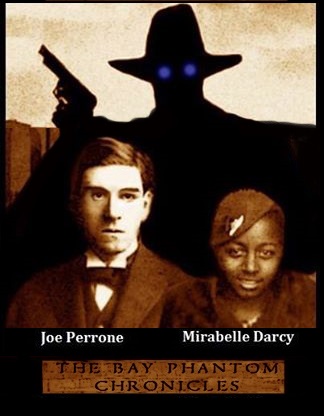
Tuesday, February 26, 2019
What have I been up to?
Nothing very noteworthy, I'm afraid. I'm still working on Doc Crater, which I started over a year ago, intending to put up a new chapter on Patreon every month. I have managed to complete a grand total of two. Life gets in the way of things sometimes. I had a not-so-good year personally, and am dealing with ISSUES-- as are we all, I guess. Also working on a new Bay Phantom and some other things, and wondering where I go from here. I want to do something different, but I don't yet know what. In the meantime, I've been collecting comics again, in a modest way. Here are a few of my recent acquisitions:
Wednesday, July 25, 2018
THE RED DAGGER STRIKES! BOOK ONE
ONLY 99 CENTS. CHEAP. Hollywood, 1933. A drunken, hedonistic, not-too-bright movie idol decides to don a mask and fight crime. Can this possibly end well? Part One of Three.
LINK:
https://www.amazon.com/gp/ product/B07FB2GSF4/
The pioneer of what has come to be known as Psychedelic Pulp brings his mix of madness and adventure to digital singles. Chuck Miller, the creator of The Black Centipede introduces The Fabulous World of Zenith, an original series that will examine the world of the Black Centipede, Vionna Valis, Mary Kelly and Doctor Unknown Junior from a variety of strange and oblique angles.
The first episode in Miller’s latest arc focuses on the Red Dagger. Is it a masked demon filling citizens' hearts with fear? Or a horrific disease spreading through the world like wildfire? Perhaps a brave hero forced to hide her identity due to some secret? Or a top secret government operation intent on dominating humanity? Only Chuck Miller knows, but every reader will discover the mystery in the Fabulous World of Zenith when THE RED DAGGER STRIKES! BOOK ONE Now Available from Pro Se Productions!
The pioneer of what has come to be known as Psychedelic Pulp brings his mix of madness and adventure to digital singles. Chuck Miller, the creator of The Black Centipede introduces The Fabulous World of Zenith, an original series that will examine the world of the Black Centipede, Vionna Valis, Mary Kelly and Doctor Unknown Junior from a variety of strange and oblique angles.
The first episode in Miller’s latest arc focuses on the Red Dagger. Is it a masked demon filling citizens' hearts with fear? Or a horrific disease spreading through the world like wildfire? Perhaps a brave hero forced to hide her identity due to some secret? Or a top secret government operation intent on dominating humanity? Only Chuck Miller knows, but every reader will discover the mystery in the Fabulous World of Zenith when THE RED DAGGER STRIKES! BOOK ONE Now Available from Pro Se Productions!
RETURN OF THE BAY PHANTOM
AIRSHIP 27 PRODUCTIONS
RETURN OF THE BAY PHANTOM
Airship 27 Productions, a leader in the New Pulp publishing community, is excited to present the second book in writer Chuck Miller’s series; “The Bay Phantom – Feast of the Cannibal Guild.”
When a shadowy group of criminals start shaking down restaurants in Mobile, Joe Perrone once again dons the cloak and goggles of the Bay Phantom. Shortly thereafter, wealthy young men begin dropping dead without warning. What do these things have in common with a mysterious psychic, a sinister funeral home, and a nationalist movement known as the Transatlantic Patriots Guild?
That is what the Bay Phantom must learn, and he must do it without his trusted aide, Mirabelle Darcy. She is away on a mission of her own; one that necessitates her breaking into the Leavenworth Federal Penitentiary. Thus left to his own devices, can the Phantom thwart the Cannibal Guild and their deadly assassin, the Mummifier? Or will he become their next victim?
“Chuck Miller is one of the most original writers in New Pulp today,” states Airship 27 Productions’ Managing Editor, Ron Fortier. “His storytelling is truly unique and he envisions the most startling characters, both good and bad, ever to grace a pulp thriller. When Miller puts a spin on a tale, you’d best hang for a truly wild ride.”
Once again Chuck Miller offers up a thrilling new adventure set in the Deep South and starring his original pulp hero; The Bay Phantom. This is pulp action with an added spicy kick. Along for the adventure are cover artist Adam Shaw and, debuting for the first time with Airship 27, interior illustrator, Kevin Paul Shaw Broden.
AIRSHIP 27 PRODUCTIONS – PULP FICTION FOR A NEW GENERATION!
Available from Amazon in print and Kindle.
RETURN OF THE BAY PHANTOM
Available from Amazon in print and Kindle.
LINK:
When a shadowy group of criminals start shaking down restaurants in Mobile, Joe Perrone once again dons the cloak and goggles of the Bay Phantom. Shortly thereafter, wealthy young men begin dropping dead without warning. What do these things have in common with a mysterious psychic, a sinister funeral home, and a nationalist movement known as the Transatlantic Patriots Guild?
That is what the Bay Phantom must learn, and he must do it without his trusted aide, Mirabelle Darcy. She is away on a mission of her own; one that necessitates her breaking into the Leavenworth Federal Penitentiary. Thus left to his own devices, can the Phantom thwart the Cannibal Guild and their deadly assassin, the Mummifier? Or will he become their next victim?
“Chuck Miller is one of the most original writers in New Pulp today,” states Airship 27 Productions’ Managing Editor, Ron Fortier. “His storytelling is truly unique and he envisions the most startling characters, both good and bad, ever to grace a pulp thriller. When Miller puts a spin on a tale, you’d best hang for a truly wild ride.”
Once again Chuck Miller offers up a thrilling new adventure set in the Deep South and starring his original pulp hero; The Bay Phantom. This is pulp action with an added spicy kick. Along for the adventure are cover artist Adam Shaw and, debuting for the first time with Airship 27, interior illustrator, Kevin Paul Shaw Broden.
AIRSHIP 27 PRODUCTIONS – PULP FICTION FOR A NEW GENERATION!
Available from Amazon in print and Kindle.
LINK:
Sunday, January 28, 2018
Doc Crater?
Who is Doc Crater? That's a good question; one he himself is unable or unwilling to answer. He is a man of mystery, with curious tastes and abilities. The possibility exists that he is not entirely sane, but this is offset by the fact that he is spectacularly rich, and seems to be a decent guy.
What does he do? For several years, he has been on a worldwide search for eight mysterious “artifacts.” He presumably knows what they are and what they can do, but he’s not telling anybody-- not even his closest associates. In the course of this quest, he has run up against some of the world’s worst criminal masterminds-- because mysterious artifacts have a way of ending up in the hands of arch-fiends-- and defeated them soundly.
He has secured two of the artifacts. And now a third has surfaced, in a small town in the American South. In order to get his hands on it, Doc must face a trio of diabolical adversaries: his childhood arch-enemy, Baron Modor Fogar; the insidious Judge Innsmouth and his Sisters of Perpetual Derision; and the corrupt, power-hungry President of the United States, Dagwood V. Tremens.
Aiding him in this mission are the members of Doc Crater’s team of specialists: Right-hand man Todd Tyler; Possibly-Undead Edweena, a brilliant scientist who claims to be a 400-year-old vampire; Rondo and Mondo, the Twins, a pair of ruthless mercenaries; the Incomprehensible Murk, a strange product of science gone extremely careless; and Debbie Daniels, an alcoholic goth poet who has no clue why she has been recruited by Crater.
All this and entirely too much more in “Doc Crater and the Third Artifact,” by Chuck Miller, only on Patreon.
Tuesday, December 19, 2017
Sunday, December 17, 2017
Saturday, December 9, 2017
KOLCHAK Double Feature: NIGHT KILLERS novel
Story: Richard Matheson, Chuck Miller
Cover Art: Mark Maddox
6’ x 9”, squarebound, $12.99, 188pgs
http://moonstonebooks.com/shop/item.aspx?itemid=1199
There were THREE Kolchak TV movies written. Two were filmed. This is the never produced THIRD movie, written by grand master RICHARD MATHESON, with some extra help from Chuck Miller! Carl Kolchak in Hawaii! But the reporter who uncovered a vampire in Las Vegas and an immortal strangler in Seattle doesn’t find sun and fun in the Aloha State. He runs up against murderous entities from beyond this world in THE NIGHT KILLERS!
Next, in an original story by Miller, we learn for the first time how Kolchak and Tony Vincenzo ended up in the Windy City. What do gangsters, crooked cops, a missing mummy, and a mysterious plague have in common? That’s what Kolchak has to find out, or find himself facing THE NIGHT CHICAGO DIED.
Sunday, June 25, 2017
And one final preview of the new Bay Phantom
CHAPTER ONE: MIRABELLE TAKES A JOURNEY
MOBILE, ALABAMA
JANUARY, 1932
“It’s a shame you won’t be in town for Mardi Gras,” Joe Perrone said.
“Not really,” Mirabelle Darcy replied. “I don’t like Mardi Gras. I never have.”
They were in the front room at Tull House, the strange old place Perrone had purchased the previous year, as both a home and a base of operations for Perrone’s activities as the Bay Phantom, Mobile’s one and only masked crime fighter. Mirabelle was dressed a bit more formally than usual, in a long skirt, gray blouse, and a brown jacket, a small hat pinned into her hair.
“Yes, but have you seen this piece in the paper about the most popular costume this year? It should interest you.”
“Why?”
“Well, according to the society editor of the Press, all the smart young ladies will be dressed as Paper Bag Girl this year.”
“Aw shit!” Mirabelle exclaimed, horrified. “Tell me you’re joking!”
Paper Bag Girl was an impromptu identity Mirabelle had publicly adopted, very briefly, during the Battle of Cathedral Square the previous year. It had been a quick, disposable way to protect her own identity and the Bay Phantom’s secrets, but had, for some incomprehensible reason, caught the public’s imagination.
Mirabelle was ostensibly Joe Perrone’s housekeeper, but in reality, she was both less and much, much more. She might occasionally turn her hand to cleaning or cooking, but such pursuits were on an as-needed basis. Most of her time was spent on arcane scientific research and the crafting of weapons and other devices for the Bay Phantom.
“If it will make you feel better,” Perrone said, “I’m joking. But I’m not. Here it is, right here.”
He waved the newspaper at her.
“I don’t wanna see that bullshit,” she grumbled.
Perrone sighed. “For heaven’s sake, Mirabelle, I thought we agreed you’d watch your language.”
“You agreed it. I never said a goddamn word. You need to watch those unilateral ‘agreements’ of yours.”
Perrone sighed again.
“I suppose there are worse habits you could have,” he said philosophically. “Are you ready? We need to get you to the train station.”
“I’ve been ready all morning, Mister Perrone.”
“There’s another thing. I thought you were going to start calling me Joe.”
“I did, Mister Perrone. I may again one day, if the spirit moves me.”
Perrone sighed once more. “All right. I know old habits die hard.”
“Yes, well, this goes a little beyond folksy homilies. If you’re all for freedom and equality, why can’t I just call you what I want to call you, and leave it at that? And while we’re at it, I wish you’d quit sighing at me all the time. That is downright annoying.”
It was out of character for Mirabelle to go off on trips, and Joe Perrone took her impending vacation as a good sign. The events of the previous year could have traumatized the young woman, but they seemed instead to have energized her. It would be a bit difficult for him to get along without her, but the potential benefits to Mirabelle outweighed any such concerns.
Though she seemed lighter and more cheerful most of the time, she had taken to spending increasingly long hours by herself, in her private rooms. She said she was working on a number of different experiments, and he had no doubt that she was, but she often emerged from her solitude looking weary and worn. Perrone wondered if she was having trouble assimilating some of the things she had learned and experienced. Perhaps her good cheer was a false front. It would be just like her to conceal any difficulties she might be having.
Even so, something had changed, and he was optimistic enough to believe that it was for the better. But there could be... problems.
***
MOBILE, ALABAMA
JANUARY, 1932
“It’s a shame you won’t be in town for Mardi Gras,” Joe Perrone said.
“Not really,” Mirabelle Darcy replied. “I don’t like Mardi Gras. I never have.”
They were in the front room at Tull House, the strange old place Perrone had purchased the previous year, as both a home and a base of operations for Perrone’s activities as the Bay Phantom, Mobile’s one and only masked crime fighter. Mirabelle was dressed a bit more formally than usual, in a long skirt, gray blouse, and a brown jacket, a small hat pinned into her hair.
“Yes, but have you seen this piece in the paper about the most popular costume this year? It should interest you.”
“Why?”
“Well, according to the society editor of the Press, all the smart young ladies will be dressed as Paper Bag Girl this year.”
“Aw shit!” Mirabelle exclaimed, horrified. “Tell me you’re joking!”
Paper Bag Girl was an impromptu identity Mirabelle had publicly adopted, very briefly, during the Battle of Cathedral Square the previous year. It had been a quick, disposable way to protect her own identity and the Bay Phantom’s secrets, but had, for some incomprehensible reason, caught the public’s imagination.
Mirabelle was ostensibly Joe Perrone’s housekeeper, but in reality, she was both less and much, much more. She might occasionally turn her hand to cleaning or cooking, but such pursuits were on an as-needed basis. Most of her time was spent on arcane scientific research and the crafting of weapons and other devices for the Bay Phantom.
“If it will make you feel better,” Perrone said, “I’m joking. But I’m not. Here it is, right here.”
He waved the newspaper at her.
“I don’t wanna see that bullshit,” she grumbled.
Perrone sighed. “For heaven’s sake, Mirabelle, I thought we agreed you’d watch your language.”
“You agreed it. I never said a goddamn word. You need to watch those unilateral ‘agreements’ of yours.”
Perrone sighed again.
“I suppose there are worse habits you could have,” he said philosophically. “Are you ready? We need to get you to the train station.”
“I’ve been ready all morning, Mister Perrone.”
“There’s another thing. I thought you were going to start calling me Joe.”
“I did, Mister Perrone. I may again one day, if the spirit moves me.”
Perrone sighed once more. “All right. I know old habits die hard.”
“Yes, well, this goes a little beyond folksy homilies. If you’re all for freedom and equality, why can’t I just call you what I want to call you, and leave it at that? And while we’re at it, I wish you’d quit sighing at me all the time. That is downright annoying.”
It was out of character for Mirabelle to go off on trips, and Joe Perrone took her impending vacation as a good sign. The events of the previous year could have traumatized the young woman, but they seemed instead to have energized her. It would be a bit difficult for him to get along without her, but the potential benefits to Mirabelle outweighed any such concerns.
Though she seemed lighter and more cheerful most of the time, she had taken to spending increasingly long hours by herself, in her private rooms. She said she was working on a number of different experiments, and he had no doubt that she was, but she often emerged from her solitude looking weary and worn. Perrone wondered if she was having trouble assimilating some of the things she had learned and experienced. Perhaps her good cheer was a false front. It would be just like her to conceal any difficulties she might be having.
Even so, something had changed, and he was optimistic enough to believe that it was for the better. But there could be... problems.
***
He drove her to the train station. Her trunk was handed off to a porter, and she kept a large satchel with her.
Before leaving her in the concourse, Perrone bent and kissed Mirabelle on the cheek, and she returned the gesture, fully aware of the distasteful looks other travelers were giving them. Perrone didn’t care about that. Mirabelle shouldn’t have, but it got her goat just the same. What the hell business was it of theirs?
“I’ll see you soon,” she said. “Take care of yourself... Joe.”
He smiled broadly. “Will do, Miss Darcy.”
She laughed and waved at him as he walked away. He was awfully sweet, and she knew he meant well. But, like a lot of more liberal white people in the South and elsewhere, he seemed to think he understood more than he possibly could.
Or maybe it was all her. She just didn’t know. Whatever genius she supposedly possessed, it could not penetrate the secrets of a human heart, not even her own.
She was dubious about Sigmund Freud’s assertion that she was the “ninth smartest person in the world.” How could he possibly know that? Most likely, it was an estimate, possibly based on some kind of demographic research. Or else he just made it up. It sounded like something out of a comic strip.
But she was not just smart, not merely a genius. Mirabelle Darcy was a super-genius. There was no getting around that.
In recent months, confronting certain memories that had been retrieved during hypnosis sessions with Doctor Freud, she wondered if she might not have some cause to doubt her sanity. But she decided that wouldn’t be practical, so she denied herself the luxury.
But some of the things she had learned demanded action. And that was the real reason for her trip.
She had told Perrone she would be visiting relatives in Zenith. In fact, so far as she knew, none of her extended family lived in that most peculiar of American cities. Once she was certain Perrone was gone, she spoke briefly with the porter, then purchased a ticket to Kansas City. She had no relatives there. But she did have a purpose.
With just a little bit of luck--or, rather, with the absence of any catastrophically bad luck-- she ought to be able to sneak right into the United States Penitentiary at Leavenworth, Kansas.
Thursday, June 8, 2017
Bay Phantom Sneak Peek 2 from "Feast of the Cannibal Guild"
Louis Rickert did not consider himself a “good person,” though he knew for a fact that he was far from the worst that humanity had to offer. He had been a criminal almost since he learned how to walk.
And now, here he was, working for a mysterious crime fighter! Life did indeed throw some curve balls at times.
Well, you don’t necessarily have to be good to do some good. He would never be a genuinely honest man, he knew, but his work for the Bay Phantom seemed to him to mitigate some of his other activities.
Anyway, he wouldn’t be much use to the masked man if he didn’t occupy a modest position in Mobile’s criminal underworld. He couldn’t do that and keep his nose totally clean at the same time. That just stood to reason.
He was in a bar, a speakeasy on the fringe of Mobile’s criminal underworld. It wasn’t the sort of place an ordinary fellow would take a date, but it wasn’t packed to the rafters with murderous hardcore gangsters either. Had Rickert been a bit more knowledgeable about religious doctrine, he might have thought of the joint as a sort of limbo.
Louis was drinking with a man who should have been one of his most feared natural enemies, a shark who could pick off a bottom feeder like Louis Rickert without any effort at all.
Shorty Red, who was close to seven feet tall and almost as colorless as an albino, sipped at a glass of club soda, while Louis consumed one shot of whiskey after another. Both Shorty and the Bay Phantom had cautioned Louis about his drinking, but he was a grown man and could do whatever he pleased. One of the few things he had never been arrested for was public intoxication, or any other kind of alcohol-related infraction. Anyhow, it had never once interfered with his ability to perform his duties for the Phantom-- except for three or four isolated incidents spread out over a period of several weeks.
“Something’s going on,” Shorty was saying, “and the Phantom wants us to look into it.”
“What’s the big deal?” asked Louis. “Sounds like an ordinary protection racket to me. What does he care about that?”
Shorty sighed. “He cares about everything, and he’s right to do so. You’ve got a bad attitude, Louis. We’ve talked about that before. If you don’t like the job, you should stop taking his money.”
“I didn’t say I wasn’t gonna do it,” Rickert replied indignantly. “I just wonder about it. Is that against the law? What am I, a zombie?”
“No, you aren’t a zombie,” Shorty said, turning his cold, colorless eyes on Rickert. “Are you implying that I am?”
Rickert flinched, even though he knew by now that Shorty Red did not and would not ever represent a physical threat to him. The hulking ex-enforcer for the Carter crime family had undergone some kind of transformation over the past few months. Shorty had been one of the most violent and unpredictable criminals on the Gulf Coast-- before he met the Bay Phantom. Though he wasn’t exactly a pussycat these days, he seemed a lot more thoughtful and sensitive, which was a good thing for Rickert, who had quite recently beaten the living hell out of Shorty with a crowbar. The giant didn’t seem to carry a grudge over it, and Rickert knew full well that the Bay Phantom was the reason for that.
“Hell no, Shorty, I ain’t implying nothing,” Rickert said. “All’s I’m doing is... Oh, never mind.”
“I won’t. Listen, this is serious business, Louis. The Carter family has been in disarray since Caleb disappeared and Penny resurfaced. They’re pulling it together, but there was a vacuum for a while. It was brief, but a few unknown factions moved in to fill it. They’re being dealt with, for the most part, But one small and mysterious group managed to gain a minor foothold. They’ve been strong-arming restaurants, but we don’t know what for, and nobody wants to talk about it. Could be protection, could be something else. Most of them are completely legit-- not speakeasies or gambling fronts. They’re frightened, that much is certain. The Phantom wants to know what’s going on and what they’re so afraid of.”
“I got no problem with that,” Rickert said. “My problem is that I could use some more money. Especially if I’m gonna be doing dangerous duties, you know? Hazard pay, I think they call it.”
Here was the crux of Louis’ current dilemma. He had quite a knack for keeping his own best interests at the forefront of his mind, no matter what was going on around him. And what was bugging him now was money. It preoccupied his thoughts to the near-exclusion of everything else.
But money was not an end in itself. It was only the means by which he believed he could achieve his true goal.
Gladys Turnbull.
Gladys’ interest in Louis had lasted for all of ten minutes. Her current indifference was not reciprocated. Louis was still interested in her, and it was making him crazy.
He couldn’t figure out what had made her turn on him. He wasn’t even slightly balding, and he had almost all of his teeth.
It had to be about money, he reasoned. That’s what it was always about with women. It was a real shame, but that’s how the world worked.
Shorty Red had suggested to him that perhaps a woman like Gladys, who was well-educated and held a responsible, respectable job as a newspaper editor, might not have very much in common with a semi-literate petty crook. That was just plain nuts. The rules of attraction didn’t pay attention to stuff like that.
It was money. Had to be.
***
Saturday, June 3, 2017
The Bay Phantom Will Return!
THE BAY PHANTOM BOOK TWO: FEAST OF THE CANNIBAL GUILD nears completion! Here's a little peek at a scene in which the Phantom's right hand, Mirabelle Darcy, has slipped into Leavenworth Penitentiary to confront the diabolical Doctor Piranha:
***
“I know you,” said Doctor Piranha, cocking his head to one side and studying her. “You used to be Mirabelle Darcy, did you not?”
“What a queer thing to say,” she replied. “I still am Mirabelle Darcy, of course.”
He nodded. “My apologies. I sometimes forget that other people are real.”
Mirabelle frowned. “Another peculiar remark. You’re just full of them, aren’t you? So, how do you recognize me? We’ve never met before-- have we? You don’t look familiar, but it appears that you’ve had something done to your face. Very good work. Impossibly good, I’d almost say. Who did it?”
“I did.”
“You... You performed plastic surgery on yourself?”
He nodded. “When I was still a teenager.”
“Damn. It must have been painful.”
“I suppose it was. I ignored that part of it.”
“Ignored it,” Mirabelle repeated.
Piranha nodded again. “Blocked it out. I had to, otherwise my hands would have shaken, and I’d have made a hash of it. You’ve performed surgical procedures before, you know they require a calm and steady hand.”
“How do you know what I’ve done?”
He shrugged and smiled at her. It wasn’t much of a smile-- just an upward curling of the corners of his mouth. His strange, cold eyes did not participate.
“Okay,” Mirabelle said after almost a minute of the ghastly silent smile, “let’s just cut the bullshit, shall we? You know who I am, and I know who you are. And you know that I know. You haven’t killed me, and I don’t believe you intend to. You must know why I came here, what I want to talk about.”
“Joe,” he said flatly.
“Joseph Perrone,” Mirabelle said pointedly. “Your brother. Don’t worry, I’m the only one who knows that. What I don’t know is what you did to him.”
More silence. The smile had slipped away. Mirabelle forced herself to keep looking him in the eye. She was damned if she’d be the first one to look away. This went on for quite some time.
“Joe doesn’t know?” Piranha finally said.
“He does not. Nor will he ever, if I have anything to say about it.”
“It wouldn’t do him much good, would it?”
“It would destroy him.”
“You’re very brave, aren’t you?” Piranha said, apropos of nothing, or so it seemed to Mirabelle. She thought for a moment, then spoke:
“Are you kidding me? I’m scared shitless. Any sane person would be. I have broken into one of the most secure prisons in the world, and I’m in a room, alone, with the most dangerous man in the world. That’s what they call you. They say you can kill a person without even thinking about it.”
“And yet here you are.”
“And yet here I am. I’m not brave; I may just be stupid. But here I am.”
“You care about him.”
“That’s obvious. And I think you do too. Whatever you did to him, you thought it was for his own good. I figured that much out. But how do you know? How do you know that whatever you did won’t kill him in the long run, or screw him up in some way you can’t imagine? You’re a mean, ruthless sonofabitch, but something in you cares about your little brother. You ran some heavy risks to make sure he’d be all right. You played God with him is what you did, but I still think that whatever you use for a heart was more or less in the right place when you did it. And now I want to know what it was. I’m smart enough to understand it, don’t worry about that.”
***
***
“I know you,” said Doctor Piranha, cocking his head to one side and studying her. “You used to be Mirabelle Darcy, did you not?”
“What a queer thing to say,” she replied. “I still am Mirabelle Darcy, of course.”
He nodded. “My apologies. I sometimes forget that other people are real.”
Mirabelle frowned. “Another peculiar remark. You’re just full of them, aren’t you? So, how do you recognize me? We’ve never met before-- have we? You don’t look familiar, but it appears that you’ve had something done to your face. Very good work. Impossibly good, I’d almost say. Who did it?”
“I did.”
“You... You performed plastic surgery on yourself?”
He nodded. “When I was still a teenager.”
“Damn. It must have been painful.”
“I suppose it was. I ignored that part of it.”
“Ignored it,” Mirabelle repeated.
Piranha nodded again. “Blocked it out. I had to, otherwise my hands would have shaken, and I’d have made a hash of it. You’ve performed surgical procedures before, you know they require a calm and steady hand.”
“How do you know what I’ve done?”
He shrugged and smiled at her. It wasn’t much of a smile-- just an upward curling of the corners of his mouth. His strange, cold eyes did not participate.
“Okay,” Mirabelle said after almost a minute of the ghastly silent smile, “let’s just cut the bullshit, shall we? You know who I am, and I know who you are. And you know that I know. You haven’t killed me, and I don’t believe you intend to. You must know why I came here, what I want to talk about.”
“Joe,” he said flatly.
“Joseph Perrone,” Mirabelle said pointedly. “Your brother. Don’t worry, I’m the only one who knows that. What I don’t know is what you did to him.”
More silence. The smile had slipped away. Mirabelle forced herself to keep looking him in the eye. She was damned if she’d be the first one to look away. This went on for quite some time.
“Joe doesn’t know?” Piranha finally said.
“He does not. Nor will he ever, if I have anything to say about it.”
“It wouldn’t do him much good, would it?”
“It would destroy him.”
“You’re very brave, aren’t you?” Piranha said, apropos of nothing, or so it seemed to Mirabelle. She thought for a moment, then spoke:
“Are you kidding me? I’m scared shitless. Any sane person would be. I have broken into one of the most secure prisons in the world, and I’m in a room, alone, with the most dangerous man in the world. That’s what they call you. They say you can kill a person without even thinking about it.”
“And yet here you are.”
“And yet here I am. I’m not brave; I may just be stupid. But here I am.”
“You care about him.”
“That’s obvious. And I think you do too. Whatever you did to him, you thought it was for his own good. I figured that much out. But how do you know? How do you know that whatever you did won’t kill him in the long run, or screw him up in some way you can’t imagine? You’re a mean, ruthless sonofabitch, but something in you cares about your little brother. You ran some heavy risks to make sure he’d be all right. You played God with him is what you did, but I still think that whatever you use for a heart was more or less in the right place when you did it. And now I want to know what it was. I’m smart enough to understand it, don’t worry about that.”
***
Friday, June 2, 2017
Great News!
NOW there is no need to just throw away all that excess money at the end of every month! Put it HERE for recycling! Not only that, but you'll get to see exclusive content, some of the BEST words, paragraphs, punctuation, and dialog!!!
Thursday, December 8, 2016
From ALL PULP: SHERLOCK HOLMES - PICTURE OF INNOCENCE
http://allpulp.blogspot.com/2016/12/sherlock-holmes-picture-of-innocence.html
AIRSHIP 27 PRODUCTIONS
Presents
THE PICTURE OF INNOCENCE
The year 1885 finds Doctor John H. Watson down on his luck. His prospects look bleak until a chance encounter leads him to a meeting with another literary-minded young physician named Arthur Conan Doyle. Together, they hatch a plan for a series of works based on the adventures of Watson’s roommate, the Consulting Detective Mr. Sherlock Holmes.
Then a very attractive young lady, Mary Morstan, arrives at 221 B Baker street seeking help. Soon Holmes and Watson are drawn into the dark world of the Sholto brothers, a web of blackmail and murder. Even with the assistance of a rising playwright named Oscar Wilde, Holmes finds himself taxed to the limit of his powers when his own darkest secrets are exposed. What truths lie beneath the surface of the Picture of Innoncence?
“Miller is one of the finest writers in New Pulp,” reports Airship 27 Productions’ Managing Editor, Ron Fortier. “There is originality to his writing unlike anything else out on the market today. And this particular Holmes adventure is no different. Miller puts a fresh spin on familiar characters and his story crackles with fun and mystery.”
Airship 27 Art Director Rob Davis provides the black and white interior illustrations and Mal Earl delivers his own special styling for the cover. “Picture of Innocence” is a book for all devoted Holmes and Watson fans; young and old alike.
AIRSHIP 27 PRODUCTIONS – PULP FICTION FOR A NEW GENERATION!
Wednesday, November 9, 2016
Mary Jane Kelly R.I.P.
One hundred and twenty-eight years ago today, Mary Jane Kelly was murdered in her room at Number 13 Miller's Court in London. She is believed to have been the final victim of the serial killer known as Jack the Ripper.

FROM VIONNA AND THE VAMPIRES:
CHAPTER SIX: THE FINAL PROBLEM
We ran all the way from the cafe back to Baker Street, leaving Moriarty behind. When we got there, Mary was gone. She had left us a note, though:
"Joseph Barnett sent word that he wants to meet me back at my room. I feel a certain obligation toward him. I have no wish to marry, but he must be told that he is to be a father. I shall be back to Baker Street as soon as possible."
My heart sank. How long ago had Mary written this note? Had she already stuck it to our door when I went out to investigate the empty house? I had forgotten to take any kind of precautions at 221-B before I rushed off with Moriarty. Had Mary still been there then? Could I have prevented her from going to Miller's Court? Oh, gosh, how stupid could I be, anyhow? The Ripper was Joseph Barnett, or vice versa. That had to be it.
"Dear God, Valis!" Holmes cried. "We haven't a moment to lose. We must get to Miss Kelly immediately!"
We got a hansom cab, and Holmes made a total nuisance of himself, pestering the driver to go faster. I didn't blame him. I'd have done it myself if Holmes hadn't had it so totally covered. Anyhow, I was busy trying to convince myself that Mary Kelly was okay and I wasn't to blame for anything.
"Vionna is the girl that won't be blamed for nothing."
The sun had climbed well above the rooftops by the time we got to Miller's Court. Holmes literally threw a handful of money at the cab driver.
We made our way Number 13. Holmes tried the door and found it locked. He banged on it for a few seconds, but that didn't accomplish anything. He went over to the little window and discovered that one of the panes was broken out. He put his hand in, pulled back the curtain, and peeked inside. He stayed that way, slightly crouched down with his eye to the opening, for a very long time. I began to notice a terrible smell coming from someplace. Holmes kept on not moving or speaking, and I could not make myself move from where I was standing, or make myself say anything, either.
I knew what Holmes was looking at. I had a picture in my mind that came from somewhere else-- I couldn't explain it, but I knew it was for real. Poor Mary Kelly, lying dead in that room. And not just dead-- the Ripper had outdone himself this time. The mutilations he had inflicted went way beyond the stuff he had done before. I couldn't think of any words to describe it. I just stood there, crying, without making a sound.
Finally, after about a million years, Holmes turned around to face me.
It was too, too late. I could tell by the look in Holmes' eyes. I had never seen anything like it. He was trembling, and all the blood had drained out of his face. The terrible smell got worse and worse and I imagined all sorts of things, and I knew that none of them could be as bad as what Sherlock Holmes had seen.
I felt like my head had been hollowed out completely. I couldn't move. As Holmes stood there, looking at me, I thought I saw a very bright light shine through the thin fabric of the curtain for just a second. Then, a few moments later, it seemed to me that I could hear my own voice coming from inside the room. I shook my head. I was losing my grip.
"We... We should go, Valis," he said.
"The police..?" I said.
Holmes closed his eyes. "To hell with the police," he said in someone else's voice. "And Her Majesty's government, too. To hell with sorcerers and vampires and all their bloody games. And, most of all, to hell with the brilliant Mister Sherlock Holmes."
I didn't like the sound of that. I knew I had just heard someone die, and I don't mean Mary Kelly.
Just then, a man came around a corner and started walking up the alleyway in our direction. I have no idea what he looked like. I couldn't really see anything just then. The man was tall or short or young or old or well-dressed or shabby. I hated him immediately, just because he was there.
"I don't imagine you know a Miss Mary Kelly that lives in that room there?" he said. I wanted to hit him.
"No, not really," Holmes replied dully.
The man gave us a curious look. I prayed that he would make a smart remark so I'd have an excuse to crack his head open. The nerve of him, standing there like that, running his mouth, while Mary Kelly...
"I've had the devil of a time pinning her down," the man was saying. "My name's Thomas Bowyer. I work for Mister M'Carthy, the landlord. Miss Kelly is seriously in arrears on her rent. In fact, it has reached the crisis point. If she comes up with one more tale about being skint..."
"I shouldn't worry about that," Holmes said in a hollow voice. "I shouldn't worry about that at all." He grabbed me by the wrist and led me away. Mister Thomas Bowyer stood scratching his stupid head.
We were almost three blocks away when we heard Thomas Bowyer scream. I hoped he would never, never, ever forget what he was seeing. I hoped his hair would turn white.
Neither Holmes nor I said a single word. We just kept walking until we reached 221-B Baker Street. Everything we passed looked and smelled funny. The sky itself seemed to be smeared with blood-- it had soaked into the ragged little clouds, and the smell of it filled the whole world.
When we finally reached 221-B, we found an envelope stuck to the door, addressed to Mister Sherlock Holmes. The handwriting on the front of it was familiar. We both knew who it was from, and neither of us wanted to open it up. We plodded up the stairs, and Holmes tossed the envelope onto the floor. He slumped into his chair and refused to answer any questions, or to speak at all. I sat down in the basket chair.
We sat there like that, totally silent, for a very long time. Hours, probably. I really can't be sure. I might even have nodded off for a while. At some point, I became aware that Holmes had gotten to his feet. He did not speak or even look at me as he moved over to the fireplace.
Sherlock Holmes took a bottle from the corner of the mantelpiece, and a hypodermic syringe from a neat morocco case. With his long, white, nervous fingers he adjusted the delicate needle and rolled back his left shirtcuff. For some little time his eyes rested thoughtfully upon the sinewy forearm and wrist, all dotted and scarred with innumerable puncture-marks. Finally, he thrust the sharp point home, pressed down the tiny piston, sank back into the velvet-lined armchair with a long sigh of satisfaction, and ...
I stood up, too. I picked up the envelope that Jack the Ripper had affixed to our front door from the floor where Holmes had tossed it, and stuck it in my pocket. Then I just sort of wandered out into the street. I wanted to go someplace, but I didn't know where.
***
https://www.amazon.com/Vionna-Vampires-Moriarty-Lord-Book/dp/1495948617/

FROM VIONNA AND THE VAMPIRES:
CHAPTER SIX: THE FINAL PROBLEM
We ran all the way from the cafe back to Baker Street, leaving Moriarty behind. When we got there, Mary was gone. She had left us a note, though:
"Joseph Barnett sent word that he wants to meet me back at my room. I feel a certain obligation toward him. I have no wish to marry, but he must be told that he is to be a father. I shall be back to Baker Street as soon as possible."
My heart sank. How long ago had Mary written this note? Had she already stuck it to our door when I went out to investigate the empty house? I had forgotten to take any kind of precautions at 221-B before I rushed off with Moriarty. Had Mary still been there then? Could I have prevented her from going to Miller's Court? Oh, gosh, how stupid could I be, anyhow? The Ripper was Joseph Barnett, or vice versa. That had to be it.
"Dear God, Valis!" Holmes cried. "We haven't a moment to lose. We must get to Miss Kelly immediately!"
We got a hansom cab, and Holmes made a total nuisance of himself, pestering the driver to go faster. I didn't blame him. I'd have done it myself if Holmes hadn't had it so totally covered. Anyhow, I was busy trying to convince myself that Mary Kelly was okay and I wasn't to blame for anything.
"Vionna is the girl that won't be blamed for nothing."
The sun had climbed well above the rooftops by the time we got to Miller's Court. Holmes literally threw a handful of money at the cab driver.
We made our way Number 13. Holmes tried the door and found it locked. He banged on it for a few seconds, but that didn't accomplish anything. He went over to the little window and discovered that one of the panes was broken out. He put his hand in, pulled back the curtain, and peeked inside. He stayed that way, slightly crouched down with his eye to the opening, for a very long time. I began to notice a terrible smell coming from someplace. Holmes kept on not moving or speaking, and I could not make myself move from where I was standing, or make myself say anything, either.
I knew what Holmes was looking at. I had a picture in my mind that came from somewhere else-- I couldn't explain it, but I knew it was for real. Poor Mary Kelly, lying dead in that room. And not just dead-- the Ripper had outdone himself this time. The mutilations he had inflicted went way beyond the stuff he had done before. I couldn't think of any words to describe it. I just stood there, crying, without making a sound.
Finally, after about a million years, Holmes turned around to face me.
It was too, too late. I could tell by the look in Holmes' eyes. I had never seen anything like it. He was trembling, and all the blood had drained out of his face. The terrible smell got worse and worse and I imagined all sorts of things, and I knew that none of them could be as bad as what Sherlock Holmes had seen.
I felt like my head had been hollowed out completely. I couldn't move. As Holmes stood there, looking at me, I thought I saw a very bright light shine through the thin fabric of the curtain for just a second. Then, a few moments later, it seemed to me that I could hear my own voice coming from inside the room. I shook my head. I was losing my grip.
"We... We should go, Valis," he said.
"The police..?" I said.
Holmes closed his eyes. "To hell with the police," he said in someone else's voice. "And Her Majesty's government, too. To hell with sorcerers and vampires and all their bloody games. And, most of all, to hell with the brilliant Mister Sherlock Holmes."
I didn't like the sound of that. I knew I had just heard someone die, and I don't mean Mary Kelly.
Just then, a man came around a corner and started walking up the alleyway in our direction. I have no idea what he looked like. I couldn't really see anything just then. The man was tall or short or young or old or well-dressed or shabby. I hated him immediately, just because he was there.
"I don't imagine you know a Miss Mary Kelly that lives in that room there?" he said. I wanted to hit him.
"No, not really," Holmes replied dully.
The man gave us a curious look. I prayed that he would make a smart remark so I'd have an excuse to crack his head open. The nerve of him, standing there like that, running his mouth, while Mary Kelly...
"I've had the devil of a time pinning her down," the man was saying. "My name's Thomas Bowyer. I work for Mister M'Carthy, the landlord. Miss Kelly is seriously in arrears on her rent. In fact, it has reached the crisis point. If she comes up with one more tale about being skint..."
"I shouldn't worry about that," Holmes said in a hollow voice. "I shouldn't worry about that at all." He grabbed me by the wrist and led me away. Mister Thomas Bowyer stood scratching his stupid head.
We were almost three blocks away when we heard Thomas Bowyer scream. I hoped he would never, never, ever forget what he was seeing. I hoped his hair would turn white.
Neither Holmes nor I said a single word. We just kept walking until we reached 221-B Baker Street. Everything we passed looked and smelled funny. The sky itself seemed to be smeared with blood-- it had soaked into the ragged little clouds, and the smell of it filled the whole world.
When we finally reached 221-B, we found an envelope stuck to the door, addressed to Mister Sherlock Holmes. The handwriting on the front of it was familiar. We both knew who it was from, and neither of us wanted to open it up. We plodded up the stairs, and Holmes tossed the envelope onto the floor. He slumped into his chair and refused to answer any questions, or to speak at all. I sat down in the basket chair.
We sat there like that, totally silent, for a very long time. Hours, probably. I really can't be sure. I might even have nodded off for a while. At some point, I became aware that Holmes had gotten to his feet. He did not speak or even look at me as he moved over to the fireplace.
Sherlock Holmes took a bottle from the corner of the mantelpiece, and a hypodermic syringe from a neat morocco case. With his long, white, nervous fingers he adjusted the delicate needle and rolled back his left shirtcuff. For some little time his eyes rested thoughtfully upon the sinewy forearm and wrist, all dotted and scarred with innumerable puncture-marks. Finally, he thrust the sharp point home, pressed down the tiny piston, sank back into the velvet-lined armchair with a long sigh of satisfaction, and ...
I stood up, too. I picked up the envelope that Jack the Ripper had affixed to our front door from the floor where Holmes had tossed it, and stuck it in my pocket. Then I just sort of wandered out into the street. I wanted to go someplace, but I didn't know where.
***
https://www.amazon.com/Vionna-Vampires-Moriarty-Lord-Book/dp/1495948617/
Sunday, November 6, 2016
Blood of the Centipede: The Lost Chapter
"REVENGE OF THE CENTIPEDE"
A tale from between chapters of Blood of the Centipede
by Chuck Miller
HOLLYWOOD, CALIFORNIA
Early Summer, 1933
I was in desperate straits. The past several days had not been kind to me. I had been set upon repeatedly by a bizarre creature in a rubber suit and a gas mask, a female horror that called herself the Black Centipede Eater. She had proven herself worthy of the name by biting off one of my fingers during our latest encounter.
And she wasn't the only fantastic fiend casting a pall over my life. It seemed to be open season on the Black Centipede, and the foulest of villains were crawling out of the California woodwork, seeking a piece of my hide.
Literally.
And now, on a studio lot in the rancid heart of darkest Hollywood, I found myself the object of a grim hunt. I have faced many lethal and horrifying opponents, but the creature from whom I now fled was one of the worst of an incredibly bad lot. I am normally brave and steadfast, but I'm not ashamed to admit that I was terrified by the prospect of being caught. I found this monster's presence loathsome and intolerable, and when I saw the fiend bearing down on me, I took to my heels.
I had come to California with the best of intentions, and had anticipated nothing like the trouble I found there. I was in Hollywood to act as a "consultant" on a motion picture that was being made by a studio controlled by media magnate William Randolph Hearst. My position carried no actual duties whatsoever, which was just as well, for two reasons. First, if it had, I would have refused to do them anyhow; and second, I was, as I mentioned earlier, up to my neck in grotesque and deadly villains.
It was the day after I had lost a pinkie to the Eater. I had spent more time than usual on the set that day, observing the chaotic filming, and dealing with a couple of loose ends that had been aggravating me. I had done well, was suitably proud of myself, and was ready to leave the studio to pursue certain investigations.
I had slipped away from the assembled company unnoticed-- or so I imagined-- and was almost to my car when I heard, coming from behind me, a voice that turned they blood in my veins to ice water.
"You there! Centipede! Stop!"
Without even looking back-- not wanting to see what I knew was there-- I quickened my pace and slipped between a couple of large, hangar-like sound stages. I moved swiftly toward the opposite end of the alleyway. I had almost made it, when I heard brisk footsteps behind me and heard the bone-chilling voice once again:
"Come here! Stop!"
I emerged from the alley, only to find, to my horror, that the street to my left was blocked by a large herd of cattle-- for some Western picture, no doubt-- and to my right by a line of Roman chariots.
Retreat was not an option. I fancied I could feel my pursuer's hot breath on the back of my neck. Cannon to the left of me, cannon to the right of me. And dead ahead... the studio commissary.
I dashed for the door, a faint cry of "Sanctuary! Sanctuary!" escaping my lips.
Fortunately, the place was jammed when I burst through the door, it being suppertime for most of the movie-makers. I dived in and struggled against the human tide, inching my way toward the rear of the room. I knew I would never make it. The fiend would be in the building before I could get halfway there.
I looked wildly around the room, seeking a straw of some kind-- any kind-- that I could grasp. All of the tables were occupied. It seemed that there wasn't a free seat in the house. Then I spotted a small table occupied by a lone man. He was drinking coffee and jotting things down in a notebook. Across from him was an empty chair. Desperately, I lunged forward and fell into it, slumping down and pulling my hat forward over the upper part of my mask.
"Don't want to bother you," I said to the man at the table, "but do you mind if I perch here for a second? I assure you, it's a matter of life and death."
"Not at all," he replied in a sonorous baritone. He seemed a little bemused, quite naturally. "Is there anything I can do to help?"
"Yes," I replied. "Hand me your newspaper."
"Very well. You ask for so little, how can I refuse?"
I leaned back against the wall, and opened the paper, holding it so that it was between me and the door. From this position of relative safety, I took a look at my rescuer.
He was a stocky, round-faced young man, very intense-looking, with the most remarkable dark brown eyes.
He took a look at my mask and said, "You're the Black Centipede, aren't you? You can't be Lancelot Cromwell, because you don't reek of liquor."
I laughed. "You know about him, I see. Yes, I'm the actual Black Centipede, idol of millions, in the heroic flesh."
"Nice to meet you. My name's Welles. Orson Welles."
The name meant nothing to me. As we shook hands, I searched my memory for something relevant.
All I could come up with was, "Are you any relation to H.G. Wells, the writer?"
He shook his head. "Not at all. I have an 'e' and he does not. Beyond that, I know next to nothing about him."
"Really? You've never read his work?"
"Not really. None of his fiction, at any rate. Doesn't he write that Buck Rogers type stuff?"
"Not at all. Wells is what is known as a Serious Writer, with capital letters. I suppose much of his work could be considered science fiction, but his stories are generally allegorical. Surely you've heard of The War of the Worlds, his novel about a Martian invasion of earth?"
Welles snorted. "What could be more absurd than that?" he scoffed.
"Perhaps," I said, "but it becomes more intriguing when you realize that the whole story is a metaphor for the British colonial experience in Africa."
He seemed interested in that. "Really? I had no idea."
"Yes, and for the less cerebral among us, it is still a damn fine adventure story. That's my opinion, anyhow. I doubt it could be made into a movie, but I imagine it could be dramatized in some other way."
"A stage play?"
I shook my head. "That would be worse than a movie. I don't know... Maybe a radio drama or something."
"Ah, yes, the theater of the imagination beats Hollywood special effects every time."
"That's my belief. Are you in the movie business?"
"Not quite. Currently, I am on tour with Katharine Cornell's touring company. We're doing The Barretts of Wimpole Street and a couple of other things. I'd like to get into the movies, though, one of these days. The company is in town, and I'm taking a couple of days to have a look around the place. So far, I find it singularly uninteresting. A shame, really. People could be doing so much more with motion pictures than they are. Most European directors are light years ahead of this pap. Von Stroheim is utterly wasted here."
As I chatted with Welles, I was glancing at the entrance every few seconds. So far, the horror that stalked me had not made an appearance. I was starting to think I was in the clear. Perhaps my pursuer had not seen me duck into here. I was beginning to unwind a bit, when a grim figure darkened the commissary doorway. I slumped down further in my seat and raised the newspaper higher.
"Excuse me!" the Voice of Doom rang out, silencing the commissary patrons. "I'm looking for the Black Centipede! Has he been in here? Has anyone seen him?"
Silence. The crowd just stared at the new arrival, awestruck. I supposed that nobody, apart from Welles, had taken any notice of me, this being Hollywood and all. Tense seconds ticked by. After an eternity on pins and needles, I heard the dread voice once again:
"If any of you see him, tell him to return to the set and speak to me. His presence is required at a very important business meeting!"
And with that, William Randolph Hearst turned on his heel and strode briskly out of the commissary.
I heaved a sigh of relief and put the newspaper down.
"Mister Welles," I said, "you have saved me from a fate worse than death."
"Call me Orson. That was Hearst, wasn't it? I heard he's financing your picture. I take it you don't like him very much."
"You take it right, Orson."
"I don't think anybody likes him," he said.
"Marion Davies seems to."
"Yes, well." He just let that one lay there.
I don't know why I felt the need to unburden myself to this stranger-- perhaps because I was near exhaustion and my defenses were down. But there was something about him that I liked.
"You should see this movie he's making about me," I said mournfully. "It's an absolute travesty. Complete nonsense. My real story would make one hell of a movie. Of course, I have no intention of sharing it with Hearst or anyone else, but still... He doesn't care what gets put out there with my name on it. He's a liar and a fabricator, and this goddamned movie reflects that. The sonofabitch wouldn't know the truth if it came up and bit him."
Welles shook his head in sympathy. "I would hate to be involved in a production of any kind that was beneath my dignity or ability."
"Well," I said, "that makes two of us, but I kind of got roped into it."
"Hearst seems a fascinating character," Orson said. " Do you know him well?"
"Better than he knows me," I said.
My new friend looked puzzled, so I elaborated. "We're not remotely what you'd call friends. There is no closeness or fellow-feeling. In fact, I despise him, and the feeling is mutual. But I have made a study of him. A very thorough one, using sources public, private and felonious. The man is an abomination."
"Really? I know he has a shady reputation. A lot of his double-dealing is public knowledge, but he's just too big for anybody to take on."
"Oh, you couldn't possibly know the half of it! Master of the phony public image, that's Hearst for you. The corruption you know about is just the tip of a very rotten iceberg."
"Do tell," Orson said.
"Oh, I'd love to tell. You know what? Somebody ought to make a movie about him. And just for the hell of it, they should tell the truth. Why, I could tell you stories about that man's dirty dealings that would curl your hair."
"Really?" Welles seemed powerfully intrigued. "I'd be very interested in hearing them. You know... this isn't a bad idea. Not a bad idea at all. A movie, I mean. Of course, if someone did it, they'd have to change the names, rearrange things a little. Replace details with allegory. But what a magnificent subject! Why, it could be a masterpiece, like Greed."
I smiled. "Yeah! Of course, the sonofabitch would raise Cain about it, but what could he do?"
"What indeed?" said Orson, leaning back in his chair, eyes closed. "This is food for thought... Would you be interested in discussing it further at some future time?"
"Oh, you bet I would!" I said, grinning wickedly behind my mask. "I would like that very much."
We exchanged contact information. By this time, I was sure the coast was clear, and I made ready to continue on my way. Then a thought struck me.
"Say," I said, lowering my voice, "I could sure use a drink, after that ordeal. Is it true that you can buy alcohol in here, under the table?"
"Yes," Orson said glumly, "but they only have wine. And they won't even sell you that until after 8 p.m. A curious restriction, considering that selling it at all is illegal until Repeal."
"I don't suppose they could be persuaded to make an exception?"
"No," Orson said, shaking his head. "I've tried. I'm afraid they will sell no wine before it's time."
CUT
***
Read the whole story today! Available on Amazon:
https://www.amazon.com/Blood-Centipede-Black-Book-ebook/dp/B009GVO43S/
Friday, July 8, 2016
Excerpts and Links
FROM BLACK CENTIPEDE CONFIDENTIAL
GET IT ON AMAZON KINDLE:
http://www.amazon.com/Black-Centipede-Confidential-Chuck-Miller-ebook/dp/B00SP5W6QI/ref=dp_kinw_strp_1
OR IN PAPERBACK:
http://www.amazon.com/Black-Centipede-Confidential-Chuck-Miller/dp/1507689209/ref=la_B005WX2CKQ_1_1_title_1_pap?s=books&ie=UTF8&qid=1434961447&sr=1-1
CHAPTER FOUR: SCOTT AND ZELDA
One hour later, I was at the rendezvous point Proofy had relayed to Amelia's contact.
There he was, standing on the sidewalk in front of the drugstore where he had been instructed to meet me. He was bundled up in an overcoat-- an expensive bit of merchandise that was beginning to run to seed. He was hatless, but had a scarf wound around the lower part of his face, and he was bouncing up and down on the balls of his feet.
I pulled the Duesenberg up to the curb, rolled down the window, and in a low, mysterious voice, delivered the first part of the code I had relayed to him via Prufrock:
“Then wear the gold hat, if that will move her; If you can bounce high, bounce for her too...”
He glanced up and down the street, stepped up to the curb, and said, “Till she cry ‘Lover, gold-hatted high-bouncing lover, I must have you!’”
I nodded and reached over to open the passenger door. “Get in.” He climbed into the seat beside me, fumbling and stumbling a bit as he did so. I gave no indication that I had noticed it.
Safely inside, with the door closed, he pulled down the scarf and whispered, “You’re the Black Centipede?”
I nodded again. “F. Scott Fitzgerald, I presume?”
Corny, I know, but I couldn’t resist. The city really is like a jungle sometimes, and Fitzgerald did look a bit like a long-lost explorer. In fact, he looked shell-shocked.
Ten minutes after I picked him up, we were in my office in the Benway Building. I had gone through an appropriately melodramatic bit of rigmarole, instructing him to don a black blindfold for the trip to my "super-secret headquarters." He had eagerly complied, seemingly delighted with my pointless skullduggery. I had taken a roundabout route back to the Benway, then pulled into one of my concealed entrances in the back alley. The secret freight elevator had hauled the Duesenberg, and us with it, up to the 66th floor. J. Alfred Prufrock had taken F. Scott Fitzgerald's coat and scarf, ushered us into my private sanctum, and made himself scarce.
"Have a seat, Mister Fitzgerald," I said as I moved around behind my desk. I got comfortable in my chair, and my visitor got uncomfortable in his.
"So you've heard of me?" he said with a sickly smile on his face.
"Well, of course I've heard of you," I said. "Who hasn't? The Great Gatsby is one of the five best novels I've ever read."
"What are the other four?" he asked, narrowing his eyes. "Are any of them mine?"
I laughed. "Learn how to accept a compliment, Mr. Fitzgerald. You've produced a genuine masterpiece. That's more than most people ever do."
He shrugged. "I suppose so. But the public has a short memory. Gatsby was eight years ago. You're only as good as your last big hit, and it has to have been last week, or nobody gives a shit about you."
"You've spent too much time in Hollywood," I said.
"Probably. In fact, in a roundabout way, that's why I've come to you. I knew Roscoe Arbuckle from some of my earlier trips to Hollywood. I talked to him the day before he died, in fact. He told me about what you did for him."
I sighed. "I'm afraid all I did was help him into an early grave."
Scott Fitzgerald shook his head. "It wasn't early. If anything, it was twelve years late. He'd have gotten there with or without you. He was just that kind of person. He never got over what happened with... you know. He'd been dead since 1921. There are some things you just can't come back from."
I sensed that this was a man who knew exactly what he was talking about. I wondered if Fitzgerald had something he could never come back from. I had a feeling that if he didn't already, he'd find one sooner or later.
"Well, anyhow," he continued, "after the thing I'm here to tell you about happened, I remembered what Roscoe had said about you. I looked up Big Jack Matteo-- he has a pretty high opinion of you, by the way-- and he suggested I get in touch with Amelia Earhart."
The poor man looked rough, as though the talking he'd just done had been an ordeal. The tremors I had noticed in his hands told me everything I needed to know.
I very casually opened a desk drawer and got out two thick glass tumblers and a bottle of scotch. As I placed them on the blotter, Fitzgerald underwent a transformation. His agitation had changed from pure distress to quivering anticipation. Without saying a word, I opened the bottle, filled the glasses, and pushed one of them in his direction. He accepted it as nonchalantly as I had offered it, and slowly raised the glass to his lips. The beatific look that spread over his face after he gulped down half of its contents told the story.
"Go ahead and finish it," I said gently. "There's plenty more, and you can have all you want. There is no judgment here."
With that, I pushed my mask up over my nose, drained my own glass, put it down, and filled it again. Smiling tentatively, Fitzgerald polished off the rest of the scotch in his tumbler. When he put it back on the desk, I filled it again.
He sipped his second drink almost languidly, free of his earlier quiet desperation. "Call me Scott," he said, leaning back and crossing his legs.
"Very well, Scott," I said. "Now, Tell me why you wanted to talk to me."
"It's my wife. Zelda. She's... missing."
"I see. Surely this is a matter for the police."
He shook his head. "No. There are... circumstances. It's hard to explain. She's gotten... involved with someone."
"I sympathize, Scott," I said, "but I'm not a private detective. If it's a divorce action, I'm afraid I..."
I knew better than that, of course, but I wanted to prod him, draw him out. I could tell he was having trouble with this, and little indignation can be a wonderful tongue-loosener.
"No, no, no," he said, in a voice that was morose and urgent in equal measure-- almost a wail. "I'm not an idiot. Not in that way, anyhow. You don't think I'd come to you with... This isn't anything as normal as an affair. That's why I can't go to the police or anybody else. That's why I thought of you... Listen, I don't know any way to say this that doesn't sound crazy, so I'll just say it:
"Zelda has taken up with a vampire."
There it was. He sat back in his chair, looking exhausted but hopeful, waiting for my response.
"Dear me," I said. "Let me refill your glass."
His face fell. "You think I'm nuts."
I shrugged. "You may well be, for all I know. It's relative, of course. But I'm not dismissing what you're saying."
"No? That's refreshing. I have a reputation as a drinker, you know."
I nodded. "My understanding is that you come by it honestly."
He laughed. "You don't mince words, Centipede... and I appreciate that, actually. So many people just try to dance around it. Yes, I drink. Therefore, any sensational story I tell people is taken with an entire salt mine, and assumed to be drunken raving. Fitzgerald is a drunkard, so Fitzgerald is seeing things."
"Being drunk," I said, "does not typically cause hallucinations. Delirium tremens do, but those are caused by the absence of alcohol in a system accustomed to it."
"Which mine is," he said with the strange, rueful pride of the alcoholic who has resigned himself to his fate, and finds a certain perverse satisfaction in it.
"The story, Scott," I gently prompted. He nodded and took a deep breath.
FROM THE BAY PHANTOM: A CONFEDERACY OF DEVILS
GET IT ON AMAZON KINDLE:
http://www.amazon.com/Bay-Phantom-Confederacy-Devils-Chuck-Miller-ebook/dp/B00O8WNNJ6/ref=la_B005WX2CKQ_1_11_title_0_main?s=books&ie=UTF8&qid=1434961447&sr=1-11
OR IN PAPERBACK
http://www.amazon.com/Bay-Phantom-Confederacy-Devils-1/dp/0692308342/ref=la_B005WX2CKQ_1_11_title_1_pap?s=books&ie=UTF8&qid=1434961447&sr=1-11
CHAPTER TWENTY-SIX: A PLAGUE ON ALL YOUR HOUSES
The Bay Phantom had arrived downtown a few minutes earlier, having taken a tunnel that came out in the living room of a vacant house on Royal Street. Smoke hung in the air from all the explosions, and sirens wailed in every direction. He questioned a couple of passers-by, who told him of the ominous gathering at Cathedral Plaza. The Phantom proceeded to the little speakeasy that seemed to have become Louis Rickert's second home. Sure enough, there was Rickert, sitting at the bar, sipping a highball.
"Louis, it's mid-afternoon," the Phantom scolded, "and I need your help. Are you too intoxicated to accompany me?"
"Hell, you act like I'm a damn alcoholic," Rickert said indignantly, barely slurring his words at all. "I'm always fit and ready to serve, Boss."
They headed west on Dauphin Street, bound for Cathedral Plaza. The Bay Phantom was appalled at what he saw.
This was a war between two factions, one represented by the KKK, the other by the Black Embalmers. There were skirmishes going on all over downtown. The Phantom imagined that most of the Klansmen weren't genuine members, but hired hands. The same went for the Black Embalmers. Here were the missing bully boys he'd been seeking.
Ordinary citizens, too, had entered into the chaos, becoming involved in the wild melees. Some of them fought Klansmen, some fought Black Embalmers, and some fought one another. Old grudges had resurfaced to take advantage of the atmosphere of sudden, lawless violence. There were looters at work, too. The Phantom shook his head at this, more in sorrow than in anger.
"Attention, looters!" he said loudly as he made his way along Dauphin Street. "Many of you are no doubt caught up in the heat of the moment and are allowing yourselves to be carried away by your emotions! But a critical situation exists in this city, and your actions are not going to help restore order!"
There was a commotion in front of the little peanut shop that had been a fixture of the downtown area for many years. The proprietor of the shop had pursued a young man into the middle of the street, and was menacing him with a shotgun.
"What is this?" the Phantom asked.
"This little bastard snatched a handful of money out of my cash register, that's what!"
The Phantom looked at the youngster and said, "Is that true?"
The boy shook his head. "He's lying, mister. He must be crazy or something."
"I'm gonna blow his goddamn head off!" said the shop owner. "That'll teach all these punks a lesson!"
"I'm sorry," said the Phantom, "but I cannot allow bloodshed over crimes against mere property. And that language hardly does credit to a merchant whose clientele includes women and children."
"Then stop me," the man said defiantly, raising the gun and drawing a bead on the young thief. his finger tightening on the trigger.
"Very well," said the Phantom. "You're just too excitable right now. I'm sorry I have to do this."
He threw a short right jab at a spot just underneath and behind the merchant's ear, instantly rendering the man unconscious.
"Now," he said, turning to the young man, "I would appreciate it if you would give me the money you stole. You may go about your business, but I hope you've learned a lesson. I don't want to find you causing any more problems."
"No! I mean, yes, yes I won't cause no more nothing!" he dug down in his pants pocket and extracted two wads of bills. "Here, take it, Your Honor! Please don't hit me."
"I'm not going to hit you," said the Phantom, "but I want you to go right home and stay out of trouble."
The young man nodded wildly and swore to God he'd never even think of stealing again. He spun on his heel and dashed away.
The Phantom stopped down and took a ring of keys from the unconscious proprietor's belt.
"Louis, please go put this money back into the cash register, and lock the door when you come back out. And drag this poor fellow inside, where he'll be relatively safe."
As Rickert moved to obey, the Phantom addressed the crowd at large:
"I understand the seductive nature of temptation, especially at a time like this, and I'm not condemning any of you! Nor do I have time to stop you. But I urge you to do the right thing! If you are unable to stop yourself now, please give it some thought in the days to come! If you need to, please consult a clergyman or some other respected authority!"
Rickert had dragged the shop owner back into his shop and tucked him away behind the counter. While the Phantom was too busy orating to pay any attention to him, Rickert pocketed the money he had been entrusted with, then helped himself to what was left in the cash register. For good measure, he stuffed two bags of roasted peanuts into his jacket pockets.
And then the gunfire started.
"Dear Lord," said the Phantom, "that's coming from Cathedral Plaza."
*
When the boy who had fired the first shot saw what he had done, he screamed, threw his shotgun down on the sidewalk, and took off running. Most of the other Klansmen in the Plaza produced firearms of various kinds and opened up on the line of Black Embalmers in front of the Cathedral. The Embalmers returned fire. A few of them held the line, while the others retreated into the building.
The Embalmers were all equipped with bullet-proof undergarments, while the Klansmen were not. Several of the latter went down in the first barrage, white robes marred by large splotches of red. A couple of them realized what was going on and concentrated on the heads of the Embalmers. Two of them were killed, and the rest retreated into the Cathedral.
Meanwhile, running gun battles and brutal fistfights between Klansmen and Black Embalmers raged for blocks in every direction around the Plaza. The Embalmers had the upper hand in most cases, and a number of them broke off from their satellite conflicts and headed for the Cathedral.
A line of Embalmers quickly assembled on a side street and crept up behind the Klansmen who were still firing on the Cathedral, their bullets knocking chips out of the front steps and punching holes in the doors. They raised their weapons and were about to cut the sheeted men down when one of the Daughters of the Confederacy spotted them. She yelled at her sisters, and they all turned to face the would-be ambushers.
Three of them reached under their hoop skirts and produced sawed-off shotguns. One of the girls, an attractive redhead, took aim at the nearest Black Embalmer and fired, hitting the macabre mask dead-center. The Embalmer went down, his head exploding in a cloud of red-tinted plaster dust.
*
"What the hell!" Rickert exclaimed.
He and the Bay Phantom had reached Cathedral Plaza, and they were both having trouble believing their eyes.
"It's a proxy war," said the Phantom. "The real generals are hidden away safely somewhere, while their minions decimate one another's ranks."
The gunfire had petered out for the time being. Several Klansmen, Black Embalmers, and hapless citizens lay dead or dying.
"Very well!" yelled the real Embalmer from atop the Cathedral. "If these miserable would-be dictators want war, then war they shall have!"
With that, the Embalmer disappeared from view. Ten seconds later, one last transport arrived at the plaza, stopping in the middle of Dauphin Street. Two Klansmen jumped out of the cab and ran to the rear of the vehicle. They jerked the doors open and stood back.
A bulky, furry apparition jumped from the truck.
The Werewolf had arrived.
The monster bounded into the middle of a group of Black Embalmers and started shredding everything within reach. Ribbons of shredded lab coats and gouts of blood went sailing into the air. People started screaming.
And then the situation got worse.
Something stirred in the windows of both of the Cathedral's towers. Then came the sound and fury, in the form of a horrible, explosive chattering sound and a hail of hot lead. There were two machine-gunners up there, one in each of the twin towers. They had the high ground, and were taking ruthless advantage of it.
"Two more of those missing machine guns, I'd wager." the Phantom said. He was trying to formulate a quick plan when he saw something that instantly became his top priority.
Two children, a boy and a girl, had somehow managed to wander into the middle of the Plaza. They were standing stock-still and obviously terrified. The trail of bullet impacts from one of the machine guns was moving along the ground, kicking up grass and dirt, heading straight for them.
The Bay Phantom sprang into action. He ran toward the children, dodging Klansmen, Black Embalmers and bullets. He snatched up the children and ran to the end of the Plaza furthest from the Cathedral. There was a good-sized gazebo there, a few feet from the sidewalk. The Phantom raced around behind it and lowered the children to the ground. He instructed them to crawl under the gazebo, which was raised a couple of feet off the ground, and stay there until he came back for them.
The Werewolf went down under a hail of machine-gun fire. The Phantom didn't think any of the bullets had penetrated his armor, but the impacts would have caused a great deal of distress. The gunners were concentrating their fire on the huddled figure. Bullets were ricocheting every which way. Six Klansmen and four Black Embalmers went down with obviously fatal head wounds.
Patches of the Werewolf's fur had caught on fire from the sparks struck from his armor by the bullets. He heaved himself upright, howled, then dropped again and rolled across the grass, evading the gunfire and extinguishing the flames at the same time. He rolled behind the gazebo, out of the line of fire.
One of the Daughters of the Confederacy dashed around the other side of the structure and placed the barrel of her shotgun against the nape of the monster's neck. Evidently, she didn't know whose side he was on. Either that, or she decided it would be a good idea to eliminate him regardless of affiliation. But before she could fire, the Werewolf lashed out. The first swipe of his claws shredded her pink hoop-skirt. The second laid her abdomen open from breastbone to groin. But she had hung on to the gun, and she used up what little life was left to her by trying to take a shot at her killer. It was a valiant effort, but her shot went wide. The Werewolf, on his feet again, kicked her in the face. She went staggering backward, leaving a trail of spilled entrails in her wake, before collapsing into a lifeless heap of blood, guts and ruined crinoline. The Phantom hoped those children hadn't witnessed that.
The Werewolf scampered off around the perimeter of the battle zone, slowing down now and then to disembowel one of the counterfeit Black Embalmers.
The Phantom wanted to pursue the monster, but the gunners in the towers were a much bigger problem. They were killing indiscriminately-- their enemies, their comrades, and the handful of innocent bystanders who hadn't made it to safety were all fair game, it seemed. He needed a few seconds to think, so he ran over to the gazebo and ducked around behind it. Crouching down he peered beneath the structure and saw that the children seemed to be unharmed.
Rickert was already back there, crouched down, popping up now and then to take a potshot at an Embalmer or a Klansman.
The machine guns in the towers fell silent, but he knew they were likely just switching out belts. Handing him a loaded automatic, the Phantom told Rickert to try to circle around and get as close as he could to the tower on the left. Rickert nodded and took off.
The Phantom was steeling himself for a suicide run at the right-hand tower when he heard someone call his name. Whirling, he saw Mirabelle standing at the mouth of a narrow alley just across the street, not twenty feet away. She had on the black stealth suit she'd worn in New Orleans. A long, tubular apparatus was slung over her shoulder by a strap, and she carried a paper bag in one hand.
"Mirabelle!" the Phantom exclaimed. "What on..."
"Shush!" she interrupted. "Don't use my name! You don't want people to know I know the Bay Phantom. Hang on one second. I have an idea."
She put the bag on the ground and removed from it two odd-looking objects, which she shoved into her belt. She took a jackknife from a front pocket and cut two small holes in the paper bag, then pulled it over her head, adjusting it so she could see through the holes. That done, she dashed across the street, joining the Phantom behind the ruined gazebo.
"How did you get here?" the Phantom asked.
"One of your tunnels comes out under the Saenger Theater, remember?" She took the large, tubular apparatus off of her shoulder and handed it to him. "This is that thing I was working on, the rocket launcher. I'll load it for you. I only brought two of the projectiles, so make 'em count."
"How did you know I'd need this?" he asked.
"How the hell would you not? Let's do it."
The Phantom stood up and balanced the weapon on his shoulder. "I hate to do this to such a storied old building," he said, "and a cathedral at that. Those towers have been there since the 1890s. But this has got to stop."
He took aim at the right-hand tower and depressed the trigger. The projectile disappeared into the gloom behind the machine gun, then there was a flash and a terrific explosion. A plume of smoke rose into the air, and debris rained down onto the street and sidewalk.
Mirabelle reloaded the launcher as the remaining machine gun opened up again.
"Forgive me," the Phantom said sorrowfully as he fired on the right-hand tower. It reacted exactly as its twin had.
The children crawled out from under the gazebo.
"Hey!" said the boy. "Ain't you the Bay Phantom?"
"Aren't I the Bay Phantom," the masked man corrected him.
"You mean you don't know?"
"Who are you?" the girl asked Mirabelle, who was slinging the rocket launcher back over her shoulder.
She seemed startled by the question. "Me? I'm, uh... I'm Paper Bag Girl. This thing on my head is a paper bag, see?"
"I know what it is,” the girl replied smartly. She appeared to be about six or seven years old, but there was something in her eyes that belonged to a much older person. “It says 'Piggly Wiggly' on the back. Are you the Bay Phantom's loyal assistant?"
"No," she said dryly, "I'm his boss."
The children looked at one another.
“He lets a dame boss him around,” the boy said with a snicker.
"So what?" said the girl.
"It's still dangerous out here, Mir... ah, Paper Bag Girl," the Phantom said. "Perhaps you should take these young people to a place of safety."
"Come on," said Mirabelle, taking each of them by the hand, "you can be my loyal assistants."
"Can I shoot off that big gun?" the girl asked eagerly.
"Hell, no!" said Mirabelle.
"Please, Paper Bag Girl... language," the Bay Phantom admonished her.
GET IT ON AMAZON KINDLE:
http://www.amazon.com/Black-Centipede-Confidential-Chuck-Miller-ebook/dp/B00SP5W6QI/ref=dp_kinw_strp_1
OR IN PAPERBACK:
http://www.amazon.com/Black-Centipede-Confidential-Chuck-Miller/dp/1507689209/ref=la_B005WX2CKQ_1_1_title_1_pap?s=books&ie=UTF8&qid=1434961447&sr=1-1
CHAPTER FOUR: SCOTT AND ZELDA
One hour later, I was at the rendezvous point Proofy had relayed to Amelia's contact.
There he was, standing on the sidewalk in front of the drugstore where he had been instructed to meet me. He was bundled up in an overcoat-- an expensive bit of merchandise that was beginning to run to seed. He was hatless, but had a scarf wound around the lower part of his face, and he was bouncing up and down on the balls of his feet.
I pulled the Duesenberg up to the curb, rolled down the window, and in a low, mysterious voice, delivered the first part of the code I had relayed to him via Prufrock:
“Then wear the gold hat, if that will move her; If you can bounce high, bounce for her too...”
He glanced up and down the street, stepped up to the curb, and said, “Till she cry ‘Lover, gold-hatted high-bouncing lover, I must have you!’”
I nodded and reached over to open the passenger door. “Get in.” He climbed into the seat beside me, fumbling and stumbling a bit as he did so. I gave no indication that I had noticed it.
Safely inside, with the door closed, he pulled down the scarf and whispered, “You’re the Black Centipede?”
I nodded again. “F. Scott Fitzgerald, I presume?”
Corny, I know, but I couldn’t resist. The city really is like a jungle sometimes, and Fitzgerald did look a bit like a long-lost explorer. In fact, he looked shell-shocked.
Ten minutes after I picked him up, we were in my office in the Benway Building. I had gone through an appropriately melodramatic bit of rigmarole, instructing him to don a black blindfold for the trip to my "super-secret headquarters." He had eagerly complied, seemingly delighted with my pointless skullduggery. I had taken a roundabout route back to the Benway, then pulled into one of my concealed entrances in the back alley. The secret freight elevator had hauled the Duesenberg, and us with it, up to the 66th floor. J. Alfred Prufrock had taken F. Scott Fitzgerald's coat and scarf, ushered us into my private sanctum, and made himself scarce.
"Have a seat, Mister Fitzgerald," I said as I moved around behind my desk. I got comfortable in my chair, and my visitor got uncomfortable in his.
"So you've heard of me?" he said with a sickly smile on his face.
"Well, of course I've heard of you," I said. "Who hasn't? The Great Gatsby is one of the five best novels I've ever read."
"What are the other four?" he asked, narrowing his eyes. "Are any of them mine?"
I laughed. "Learn how to accept a compliment, Mr. Fitzgerald. You've produced a genuine masterpiece. That's more than most people ever do."
He shrugged. "I suppose so. But the public has a short memory. Gatsby was eight years ago. You're only as good as your last big hit, and it has to have been last week, or nobody gives a shit about you."
"You've spent too much time in Hollywood," I said.
"Probably. In fact, in a roundabout way, that's why I've come to you. I knew Roscoe Arbuckle from some of my earlier trips to Hollywood. I talked to him the day before he died, in fact. He told me about what you did for him."
I sighed. "I'm afraid all I did was help him into an early grave."
Scott Fitzgerald shook his head. "It wasn't early. If anything, it was twelve years late. He'd have gotten there with or without you. He was just that kind of person. He never got over what happened with... you know. He'd been dead since 1921. There are some things you just can't come back from."
I sensed that this was a man who knew exactly what he was talking about. I wondered if Fitzgerald had something he could never come back from. I had a feeling that if he didn't already, he'd find one sooner or later.
"Well, anyhow," he continued, "after the thing I'm here to tell you about happened, I remembered what Roscoe had said about you. I looked up Big Jack Matteo-- he has a pretty high opinion of you, by the way-- and he suggested I get in touch with Amelia Earhart."
The poor man looked rough, as though the talking he'd just done had been an ordeal. The tremors I had noticed in his hands told me everything I needed to know.
I very casually opened a desk drawer and got out two thick glass tumblers and a bottle of scotch. As I placed them on the blotter, Fitzgerald underwent a transformation. His agitation had changed from pure distress to quivering anticipation. Without saying a word, I opened the bottle, filled the glasses, and pushed one of them in his direction. He accepted it as nonchalantly as I had offered it, and slowly raised the glass to his lips. The beatific look that spread over his face after he gulped down half of its contents told the story.
"Go ahead and finish it," I said gently. "There's plenty more, and you can have all you want. There is no judgment here."
With that, I pushed my mask up over my nose, drained my own glass, put it down, and filled it again. Smiling tentatively, Fitzgerald polished off the rest of the scotch in his tumbler. When he put it back on the desk, I filled it again.
He sipped his second drink almost languidly, free of his earlier quiet desperation. "Call me Scott," he said, leaning back and crossing his legs.
"Very well, Scott," I said. "Now, Tell me why you wanted to talk to me."
"It's my wife. Zelda. She's... missing."
"I see. Surely this is a matter for the police."
He shook his head. "No. There are... circumstances. It's hard to explain. She's gotten... involved with someone."
"I sympathize, Scott," I said, "but I'm not a private detective. If it's a divorce action, I'm afraid I..."
I knew better than that, of course, but I wanted to prod him, draw him out. I could tell he was having trouble with this, and little indignation can be a wonderful tongue-loosener.
"No, no, no," he said, in a voice that was morose and urgent in equal measure-- almost a wail. "I'm not an idiot. Not in that way, anyhow. You don't think I'd come to you with... This isn't anything as normal as an affair. That's why I can't go to the police or anybody else. That's why I thought of you... Listen, I don't know any way to say this that doesn't sound crazy, so I'll just say it:
"Zelda has taken up with a vampire."
There it was. He sat back in his chair, looking exhausted but hopeful, waiting for my response.
"Dear me," I said. "Let me refill your glass."
His face fell. "You think I'm nuts."
I shrugged. "You may well be, for all I know. It's relative, of course. But I'm not dismissing what you're saying."
"No? That's refreshing. I have a reputation as a drinker, you know."
I nodded. "My understanding is that you come by it honestly."
He laughed. "You don't mince words, Centipede... and I appreciate that, actually. So many people just try to dance around it. Yes, I drink. Therefore, any sensational story I tell people is taken with an entire salt mine, and assumed to be drunken raving. Fitzgerald is a drunkard, so Fitzgerald is seeing things."
"Being drunk," I said, "does not typically cause hallucinations. Delirium tremens do, but those are caused by the absence of alcohol in a system accustomed to it."
"Which mine is," he said with the strange, rueful pride of the alcoholic who has resigned himself to his fate, and finds a certain perverse satisfaction in it.
"The story, Scott," I gently prompted. He nodded and took a deep breath.
***
GET IT ON AMAZON KINDLE:
http://www.amazon.com/Bay-Phantom-Confederacy-Devils-Chuck-Miller-ebook/dp/B00O8WNNJ6/ref=la_B005WX2CKQ_1_11_title_0_main?s=books&ie=UTF8&qid=1434961447&sr=1-11
OR IN PAPERBACK
http://www.amazon.com/Bay-Phantom-Confederacy-Devils-1/dp/0692308342/ref=la_B005WX2CKQ_1_11_title_1_pap?s=books&ie=UTF8&qid=1434961447&sr=1-11
CHAPTER TWENTY-SIX: A PLAGUE ON ALL YOUR HOUSES
The Bay Phantom had arrived downtown a few minutes earlier, having taken a tunnel that came out in the living room of a vacant house on Royal Street. Smoke hung in the air from all the explosions, and sirens wailed in every direction. He questioned a couple of passers-by, who told him of the ominous gathering at Cathedral Plaza. The Phantom proceeded to the little speakeasy that seemed to have become Louis Rickert's second home. Sure enough, there was Rickert, sitting at the bar, sipping a highball.
"Louis, it's mid-afternoon," the Phantom scolded, "and I need your help. Are you too intoxicated to accompany me?"
"Hell, you act like I'm a damn alcoholic," Rickert said indignantly, barely slurring his words at all. "I'm always fit and ready to serve, Boss."
They headed west on Dauphin Street, bound for Cathedral Plaza. The Bay Phantom was appalled at what he saw.
This was a war between two factions, one represented by the KKK, the other by the Black Embalmers. There were skirmishes going on all over downtown. The Phantom imagined that most of the Klansmen weren't genuine members, but hired hands. The same went for the Black Embalmers. Here were the missing bully boys he'd been seeking.
Ordinary citizens, too, had entered into the chaos, becoming involved in the wild melees. Some of them fought Klansmen, some fought Black Embalmers, and some fought one another. Old grudges had resurfaced to take advantage of the atmosphere of sudden, lawless violence. There were looters at work, too. The Phantom shook his head at this, more in sorrow than in anger.
"Attention, looters!" he said loudly as he made his way along Dauphin Street. "Many of you are no doubt caught up in the heat of the moment and are allowing yourselves to be carried away by your emotions! But a critical situation exists in this city, and your actions are not going to help restore order!"
There was a commotion in front of the little peanut shop that had been a fixture of the downtown area for many years. The proprietor of the shop had pursued a young man into the middle of the street, and was menacing him with a shotgun.
"What is this?" the Phantom asked.
"This little bastard snatched a handful of money out of my cash register, that's what!"
The Phantom looked at the youngster and said, "Is that true?"
The boy shook his head. "He's lying, mister. He must be crazy or something."
"I'm gonna blow his goddamn head off!" said the shop owner. "That'll teach all these punks a lesson!"
"I'm sorry," said the Phantom, "but I cannot allow bloodshed over crimes against mere property. And that language hardly does credit to a merchant whose clientele includes women and children."
"Then stop me," the man said defiantly, raising the gun and drawing a bead on the young thief. his finger tightening on the trigger.
"Very well," said the Phantom. "You're just too excitable right now. I'm sorry I have to do this."
He threw a short right jab at a spot just underneath and behind the merchant's ear, instantly rendering the man unconscious.
"Now," he said, turning to the young man, "I would appreciate it if you would give me the money you stole. You may go about your business, but I hope you've learned a lesson. I don't want to find you causing any more problems."
"No! I mean, yes, yes I won't cause no more nothing!" he dug down in his pants pocket and extracted two wads of bills. "Here, take it, Your Honor! Please don't hit me."
"I'm not going to hit you," said the Phantom, "but I want you to go right home and stay out of trouble."
The young man nodded wildly and swore to God he'd never even think of stealing again. He spun on his heel and dashed away.
The Phantom stopped down and took a ring of keys from the unconscious proprietor's belt.
"Louis, please go put this money back into the cash register, and lock the door when you come back out. And drag this poor fellow inside, where he'll be relatively safe."
As Rickert moved to obey, the Phantom addressed the crowd at large:
"I understand the seductive nature of temptation, especially at a time like this, and I'm not condemning any of you! Nor do I have time to stop you. But I urge you to do the right thing! If you are unable to stop yourself now, please give it some thought in the days to come! If you need to, please consult a clergyman or some other respected authority!"
Rickert had dragged the shop owner back into his shop and tucked him away behind the counter. While the Phantom was too busy orating to pay any attention to him, Rickert pocketed the money he had been entrusted with, then helped himself to what was left in the cash register. For good measure, he stuffed two bags of roasted peanuts into his jacket pockets.
And then the gunfire started.
"Dear Lord," said the Phantom, "that's coming from Cathedral Plaza."
*
When the boy who had fired the first shot saw what he had done, he screamed, threw his shotgun down on the sidewalk, and took off running. Most of the other Klansmen in the Plaza produced firearms of various kinds and opened up on the line of Black Embalmers in front of the Cathedral. The Embalmers returned fire. A few of them held the line, while the others retreated into the building.
The Embalmers were all equipped with bullet-proof undergarments, while the Klansmen were not. Several of the latter went down in the first barrage, white robes marred by large splotches of red. A couple of them realized what was going on and concentrated on the heads of the Embalmers. Two of them were killed, and the rest retreated into the Cathedral.
Meanwhile, running gun battles and brutal fistfights between Klansmen and Black Embalmers raged for blocks in every direction around the Plaza. The Embalmers had the upper hand in most cases, and a number of them broke off from their satellite conflicts and headed for the Cathedral.
A line of Embalmers quickly assembled on a side street and crept up behind the Klansmen who were still firing on the Cathedral, their bullets knocking chips out of the front steps and punching holes in the doors. They raised their weapons and were about to cut the sheeted men down when one of the Daughters of the Confederacy spotted them. She yelled at her sisters, and they all turned to face the would-be ambushers.
Three of them reached under their hoop skirts and produced sawed-off shotguns. One of the girls, an attractive redhead, took aim at the nearest Black Embalmer and fired, hitting the macabre mask dead-center. The Embalmer went down, his head exploding in a cloud of red-tinted plaster dust.
*
"What the hell!" Rickert exclaimed.
He and the Bay Phantom had reached Cathedral Plaza, and they were both having trouble believing their eyes.
"It's a proxy war," said the Phantom. "The real generals are hidden away safely somewhere, while their minions decimate one another's ranks."
The gunfire had petered out for the time being. Several Klansmen, Black Embalmers, and hapless citizens lay dead or dying.
"Very well!" yelled the real Embalmer from atop the Cathedral. "If these miserable would-be dictators want war, then war they shall have!"
With that, the Embalmer disappeared from view. Ten seconds later, one last transport arrived at the plaza, stopping in the middle of Dauphin Street. Two Klansmen jumped out of the cab and ran to the rear of the vehicle. They jerked the doors open and stood back.
A bulky, furry apparition jumped from the truck.
The Werewolf had arrived.
The monster bounded into the middle of a group of Black Embalmers and started shredding everything within reach. Ribbons of shredded lab coats and gouts of blood went sailing into the air. People started screaming.
And then the situation got worse.
Something stirred in the windows of both of the Cathedral's towers. Then came the sound and fury, in the form of a horrible, explosive chattering sound and a hail of hot lead. There were two machine-gunners up there, one in each of the twin towers. They had the high ground, and were taking ruthless advantage of it.
"Two more of those missing machine guns, I'd wager." the Phantom said. He was trying to formulate a quick plan when he saw something that instantly became his top priority.
Two children, a boy and a girl, had somehow managed to wander into the middle of the Plaza. They were standing stock-still and obviously terrified. The trail of bullet impacts from one of the machine guns was moving along the ground, kicking up grass and dirt, heading straight for them.
The Bay Phantom sprang into action. He ran toward the children, dodging Klansmen, Black Embalmers and bullets. He snatched up the children and ran to the end of the Plaza furthest from the Cathedral. There was a good-sized gazebo there, a few feet from the sidewalk. The Phantom raced around behind it and lowered the children to the ground. He instructed them to crawl under the gazebo, which was raised a couple of feet off the ground, and stay there until he came back for them.
The Werewolf went down under a hail of machine-gun fire. The Phantom didn't think any of the bullets had penetrated his armor, but the impacts would have caused a great deal of distress. The gunners were concentrating their fire on the huddled figure. Bullets were ricocheting every which way. Six Klansmen and four Black Embalmers went down with obviously fatal head wounds.
Patches of the Werewolf's fur had caught on fire from the sparks struck from his armor by the bullets. He heaved himself upright, howled, then dropped again and rolled across the grass, evading the gunfire and extinguishing the flames at the same time. He rolled behind the gazebo, out of the line of fire.
One of the Daughters of the Confederacy dashed around the other side of the structure and placed the barrel of her shotgun against the nape of the monster's neck. Evidently, she didn't know whose side he was on. Either that, or she decided it would be a good idea to eliminate him regardless of affiliation. But before she could fire, the Werewolf lashed out. The first swipe of his claws shredded her pink hoop-skirt. The second laid her abdomen open from breastbone to groin. But she had hung on to the gun, and she used up what little life was left to her by trying to take a shot at her killer. It was a valiant effort, but her shot went wide. The Werewolf, on his feet again, kicked her in the face. She went staggering backward, leaving a trail of spilled entrails in her wake, before collapsing into a lifeless heap of blood, guts and ruined crinoline. The Phantom hoped those children hadn't witnessed that.
The Werewolf scampered off around the perimeter of the battle zone, slowing down now and then to disembowel one of the counterfeit Black Embalmers.
The Phantom wanted to pursue the monster, but the gunners in the towers were a much bigger problem. They were killing indiscriminately-- their enemies, their comrades, and the handful of innocent bystanders who hadn't made it to safety were all fair game, it seemed. He needed a few seconds to think, so he ran over to the gazebo and ducked around behind it. Crouching down he peered beneath the structure and saw that the children seemed to be unharmed.
Rickert was already back there, crouched down, popping up now and then to take a potshot at an Embalmer or a Klansman.
The machine guns in the towers fell silent, but he knew they were likely just switching out belts. Handing him a loaded automatic, the Phantom told Rickert to try to circle around and get as close as he could to the tower on the left. Rickert nodded and took off.
The Phantom was steeling himself for a suicide run at the right-hand tower when he heard someone call his name. Whirling, he saw Mirabelle standing at the mouth of a narrow alley just across the street, not twenty feet away. She had on the black stealth suit she'd worn in New Orleans. A long, tubular apparatus was slung over her shoulder by a strap, and she carried a paper bag in one hand.
"Mirabelle!" the Phantom exclaimed. "What on..."
"Shush!" she interrupted. "Don't use my name! You don't want people to know I know the Bay Phantom. Hang on one second. I have an idea."
She put the bag on the ground and removed from it two odd-looking objects, which she shoved into her belt. She took a jackknife from a front pocket and cut two small holes in the paper bag, then pulled it over her head, adjusting it so she could see through the holes. That done, she dashed across the street, joining the Phantom behind the ruined gazebo.
"How did you get here?" the Phantom asked.
"One of your tunnels comes out under the Saenger Theater, remember?" She took the large, tubular apparatus off of her shoulder and handed it to him. "This is that thing I was working on, the rocket launcher. I'll load it for you. I only brought two of the projectiles, so make 'em count."
"How did you know I'd need this?" he asked.
"How the hell would you not? Let's do it."
The Phantom stood up and balanced the weapon on his shoulder. "I hate to do this to such a storied old building," he said, "and a cathedral at that. Those towers have been there since the 1890s. But this has got to stop."
He took aim at the right-hand tower and depressed the trigger. The projectile disappeared into the gloom behind the machine gun, then there was a flash and a terrific explosion. A plume of smoke rose into the air, and debris rained down onto the street and sidewalk.
Mirabelle reloaded the launcher as the remaining machine gun opened up again.
"Forgive me," the Phantom said sorrowfully as he fired on the right-hand tower. It reacted exactly as its twin had.
The children crawled out from under the gazebo.
"Hey!" said the boy. "Ain't you the Bay Phantom?"
"Aren't I the Bay Phantom," the masked man corrected him.
"You mean you don't know?"
"Who are you?" the girl asked Mirabelle, who was slinging the rocket launcher back over her shoulder.
She seemed startled by the question. "Me? I'm, uh... I'm Paper Bag Girl. This thing on my head is a paper bag, see?"
"I know what it is,” the girl replied smartly. She appeared to be about six or seven years old, but there was something in her eyes that belonged to a much older person. “It says 'Piggly Wiggly' on the back. Are you the Bay Phantom's loyal assistant?"
"No," she said dryly, "I'm his boss."
The children looked at one another.
“He lets a dame boss him around,” the boy said with a snicker.
"So what?" said the girl.
"It's still dangerous out here, Mir... ah, Paper Bag Girl," the Phantom said. "Perhaps you should take these young people to a place of safety."
"Come on," said Mirabelle, taking each of them by the hand, "you can be my loyal assistants."
"Can I shoot off that big gun?" the girl asked eagerly.
"Hell, no!" said Mirabelle.
"Please, Paper Bag Girl... language," the Bay Phantom admonished her.
***
FROM VIONNA AND THE VAMPIRES
GET IT ON AMAZON KINDLE:
OR IN PAPERBACK:
PART TWO
MISS VIONNA VALIS OF BAKER STREET
INTRODUCTION
That night, after Mary and I got back home and I went to sleep, something happened.
I'm not going to call it a dream, because it wasn't.
I went to bed, nodded off to sleep, and all this weird stuff started happening. It was like a dream in some ways, but it wasn't a dream. It made more sense than a dream usually does, for one thing. But, like a dream, it seemed to me at the time that everything was the way it was supposed to be.
After I dropped off to sleep, the whole thing started up, just like a movie or a play or a Sherlock Holmes story told by Doctor Watson.
With one important difference.
You'll see what I mean.
CHAPTER ONE: MISTER SHERLOCK HOLMES
Being a reprint from the reminiscences of Miss Vionna Vernet Valis,
late of the Colney Hatch Lunatic Asylum
MISS VIONNA VALIS OF BAKER STREET
INTRODUCTION
That night, after Mary and I got back home and I went to sleep, something happened.
I'm not going to call it a dream, because it wasn't.
I went to bed, nodded off to sleep, and all this weird stuff started happening. It was like a dream in some ways, but it wasn't a dream. It made more sense than a dream usually does, for one thing. But, like a dream, it seemed to me at the time that everything was the way it was supposed to be.
After I dropped off to sleep, the whole thing started up, just like a movie or a play or a Sherlock Holmes story told by Doctor Watson.
With one important difference.
You'll see what I mean.
CHAPTER ONE: MISTER SHERLOCK HOLMES
Being a reprint from the reminiscences of Miss Vionna Vernet Valis,
late of the Colney Hatch Lunatic Asylum
It was a fine evening in the autumn of the year 1888, and Mister Sherlock Holmes, the big-deal genius consulting detective, with whom I shared rooms at 221B Baker Street, had been sitting in the same position for like hours and hours and hours without saying a word to me. He was crouched over a flask from his massive chemistry set, brewing up this horrible reeking glop. He was stinking up the whole house with it, but he didn't care. He always pretty much does whatever the heck he feels like, up to and including shooting holes in the wall with a pistol.
I'm totally serious, he did that one time. The holes are still there. In the shape of the Queen's initials. Honest.
If I did something like that, they'd put me away.
"So," said Holmes, suddenly, "you do not propose to invest in South African securities?"
I just sat there and looked at him for a few seconds. Holmes is always saying crazy stuff like that, and I hardly ever pay any attention to it. He seemed to be waiting for an answer, though, so I finally said, "I guess not. I've never even thought about doing anything like that."
He wheeled around on his little stool, holding his flask full of smelly crap, with a goofy gleam in his deep-set eyes. The gleam turned into a look of mild shock.
"What on earth..?" he said. "I could have sworn for a moment that you were... somebody else, Valis. Strange. I had the impression that you ought to be a... well, never mind." He shook his head. "Now, confess yourself utterly taken aback."
"Huh? I don't follow you."
"Confess yourself completely mystified, Valis," he said sharply. "And then ask me to explain how I could possibly know such a thing. Don't you want me to reveal to you the chain of reasoning by which I arrived at my conclusion?"
I shrugged again. "Not unless you're just dying to. Where the heck is Mrs. Hudson? She should have brought our dinner up by now. I'm starving."
“You remember,” he continued, “that some little time ago when I read you the passage in one of Poe’s sketches in which a close reasoner follows the unspoken thoughts of his companion, you were inclined to treat the matter as a mere tour-de-force of the author. On my remarking that I was constantly in the habit of doing the same thing you expressed incredulity.”
"Nope," I said truthfully. "I don't remember that at all."
Holmes scowled at me and said, "My dear Valis, I must insist that you demand an explanation from me. You must be curious about how I was able to divine your mental processes and come to the conclusion that you have decided not to invest in South African securities."
"Is that what I was thinking? I'm not saying you're wrong, but I don't remember thinking about anything like that. It must have been a fluke. If you say so, I believe you, but I don't even know what a South African security is. When did you learn how to read people's minds?"
"I cannot read people's minds," he replied, closing his eyes, pinching the bridge of his nose, and sounding a little peeved. "I deduced it in the same way Poe's character did, by... Oh, never mind. We'll just take it as read that I'm brilliant. I do, however, wish you could bring yourself to at least feign incredulity."
"If I knew what that word meant, I might."
Before Holmes or I could say anything else, we heard the sound of someone coming up the stairs. I was hoping for Mrs. Hudson and food, but whoever it was stopped and knocked on the door, which Mrs. Hudson hardly ever does without hollering to tell us who she is.
Holmes threw open the door-- he always does even the smallest things in a dramatic way-- and there stood good old Inspector Lestrade. He's a police detective, and he is constantly bugging Holmes with problems and cases he isn't able to solve by himself.
Lestrade is kind of small for a man, and he looks sort of like a rat in the face, but I don't mean that in bad way. Well, I don't guess there's any good way to mean that, but I'm not trying to insult him, that's just how he looks. He has big front teeth that protrude a little, and his eyes are sort of beady.
"Do come in, Inspector," Holmes said," and have a seat. I fancy a small drop of something wouldn't come amiss?"
"Normally, I would say not while I'm on duty," said Lestrade, taking a seat in the basket chair. "But since I am at present on duty around the clock, I believe I can make an exception."
"You have come to consult me," Holmes said as he whipped up a tumbler of whiskey and soda, "with regard to these Whitechapel killings, I believe."
Lestrade looked at me, smiling and shaking his head. "How does he do it, Miss Valis?"
"Well," I said, "in this case, he probably figured it out from the fact that you have some mud on the cuffs of your trousers that came from where they're digging up the road in front of the post office. Also from the calluses on your right thumb and forefinger."
He looked at his right hand for a couple seconds, then said, "Why, I don't have any..."
"Never mind that, Inspector," Holmes interrupted, giving me a look. "Valis imagines she has a sense of humor now and then. It's best to pay her no mind."
I made a noise, but Holmes paid me no mind.
"It was actually a very elementary deduction on my part," he continued. "The murders are the reason you, and many of your fellow officers, are on round-the-clock duty."
"Then you know we are up against the wall."
Holmes nodded. "I have heard that careers may be at stake. It is too often the case among police officials that the danger to their standing is cause for more concern than the fate of a killer and his victims. Your lack of blinkered personal ambition does you credit, Lestrade."
The inspector nodded. "Warren himself may be in jeopardy if the killer is not brought to book. So he is making life difficult for his subordinates. Most have been feeding him spurious reassurances. I, on the other hand, have admitted that the case defies everything I have learned about criminal investigation. I cannot suggest a course of action.”
“Dear me, Inspector,” Holmes said. “In all your years on the force, you have not mastered the art of telling your superiors what they wish to hear, rather than what you know to be true?”
Lestrade came up with a grim little smile and said, “Toadying has never been my strong suit. I tell my superiors the truth, because the only way to get to the bottom of these outrages is to clearly establish just how much we do not know.”
“Excellent! I flatter myself that some of my own hard-won wisdom has rubbed off on you. I may have done you a disservice, though. Your intelligence and experience, combined with your customary forthrightness, could serve to make you expendable."
“Perhaps," Lestrade said, "But that isn't why I've come to you. I am here because I am utterly stumped and because I cannot bear the thought of that butcher having his way with even one more poor woman. I will see this Jack the Ripper hang for what he has done."
What he was talking about was a series of murders that had recently been committed in the East End of London, which is a dangerous, impoverished place. Somebody that called himself Jack the Ripper had been slaughtering prostitutes in an area called Whitechapel. The murders were totally heinous, some of the most gruesome stuff I had ever heard of. Four women had been killed so far.
"Jack the Ripper," Holmes repeated slowly. "The name he has signed to his correspondence. He seems quite adept at spreading terror with a pen as well as with a knife. The name is just jocular enough to be truly chilling in the context of his deeds. And it raises the shade of another nocturnal bogeyman, the legendary Spring-Heel Jack. Devilishly clever, eh, Valis?"
I shrugged. "If you say so."
Lestrade cleared his throat. "Well,” he said, “we are not at all sure, Mister Holmes, that the letter received by the Central News Agency, claiming credit for the murders and giving that 'trade name,' was in fact written by the killer. There is a rumor we are striving to track to its source to the effect that a journalist produced the thing to create further sensationalism around the case."
"Not an untenable hypothesis,” Holmes said. "It's a great pity that Warren ordered the graffiti found in Goulston Street on the night of the 'Double Event' to be rubbed out before it could be photographed. That might have provided some grist for the deductive mill."
During the early morning of September 30, Jack the Ripper had killed two women, Elizabeth Stride and Catherine Eddowes. Shortly after the second murder, a police constable found a blood-soaked piece of an apron at the entrance to a tenement in Goulston Street. On the wall above the spot where the piece of apron-- which turned out to have belonged to Catherine Eddowes-- had been found, somebody had written a strange message in chalk: "The Juwes are the men that will not be blamed for nothing." It didn't seem to have any real meaning, and nobody knew if "Juwes" referred to Jews or something else entirely. It wasn't even for sure that the Ripper had written it. But it could have been important. Which is why it was strange that Sir Charles Warren, Commissioner of the Metropolitan Police, had personally ordered that it be erased before the sun came up-- without it being photographed.
Lestrade shook his head sadly and said, "Isn't that the truth, sir? A criminal act in itself, if you ask me. Warren's conduct throughout this Ripper affair has been odd. And it isn't just him. A great many of the higher-ups have behaved like fools or children. They have made a difficult job nearly impossible with their dithering and bickering."
Lestrade closed his eyes, took a couple of deep breaths, and drank some whiskey before he spoke again.
"The Ripper has been quiet for a few weeks now," he said, "but I cannot kid myself that he is finished. I have the awful feeling that he is planning on an outrage that will eclipse his previous crimes. I am not officially empowered to ask you to take on the case. It isn't your usual line of country, I know. The Ripper seems to be a random madman. But I believe you can do it. I implore you, sir."
"Alas, Lestrade, I cannot."
The inspector looked stunned. So did I.
"And why not, if I may ask?" Lestrade's mood, which was not very chipper to begin with, had just changed for the worse.
"Prior commitments," Holmes said flatly.
"Now, see here! If locating some old dowager's diamond tiara, or..."
"I'm sorry, Inspector," Holmes said gently but firmly, but more firmly than gently, "but I cannot undertake to assist you. I am sorry."
"At least four women have died. How many more are doomed? I implore you, sir."
"I cannot."
"And that is your final word?"
"I'm afraid it is."
Lestrade was fuming. "Well! A fine thing! A very good day to you, Mister Sherlock Holmes!" He said it in a tone that made it clear he actually hoped Holmes would have a very bad day; maybe a week or a month of nothing but bad days. He nodded at me and said "Miss Valis," in a snotty voice, even though all I did was sit and mind my own business.
"He was pretty ticked off," I observed, after the inspector had stormed out of the room, stomped down the seventeen steps to the ground floor, and slammed out through the door onto the street, cursing the whole way.
"Yes," Holmes said calmly, "but I imagine his condition will improve when I deliver the Ripper into his hands, along with sufficient evidence to send the fiend to the gallows."
"Huh? You just told him you wouldn't take the case!"
"True enough," he said, frowning at me." But what I did not tell him is that I cannot take on the case for him, because it would be unethical."
"What?" I said, giving him back his frown with interest. "How the heck is it not unethical to refuse to help the police catch a murderer? Especially this one! Jack the Ripper has cut four women to bits, pulled their guts out, and tossed them around all over the public streets!"
"The entrails were not tossed around, Valis. They were very deliberately draped, in two cases, over the victims' shoulders. And Elizabeth Stride merely had her throat cut. She was not disemboweled."
"That doesn't make it any better," I pointed out.
"I know that. But I cannot investigate the case for Lestrade for the simple reason that I am already investigating it for someone else."
That surprised me. "Who?"
"My client has resources the police do not, and has agreed to put them at my disposal. The Ripper has drawn a great deal of official attention to the East End, and my client finds the increased police presence most inconvenient."
"Which totally does not answer my question," I pointed out. "And how would all of that stuff be true? I mean, unless he's a criminal himself."
Holmes said nothing, just looked at me and smiled.
"He is!" I exclaimed. "You're working for a criminal!"
"You're right, Valis. I'll not mince words. I am climbing into bed with the devil I know, that I may put paid to the one I do not."
I'm totally serious, he did that one time. The holes are still there. In the shape of the Queen's initials. Honest.
If I did something like that, they'd put me away.
"So," said Holmes, suddenly, "you do not propose to invest in South African securities?"
I just sat there and looked at him for a few seconds. Holmes is always saying crazy stuff like that, and I hardly ever pay any attention to it. He seemed to be waiting for an answer, though, so I finally said, "I guess not. I've never even thought about doing anything like that."
He wheeled around on his little stool, holding his flask full of smelly crap, with a goofy gleam in his deep-set eyes. The gleam turned into a look of mild shock.
"What on earth..?" he said. "I could have sworn for a moment that you were... somebody else, Valis. Strange. I had the impression that you ought to be a... well, never mind." He shook his head. "Now, confess yourself utterly taken aback."
"Huh? I don't follow you."
"Confess yourself completely mystified, Valis," he said sharply. "And then ask me to explain how I could possibly know such a thing. Don't you want me to reveal to you the chain of reasoning by which I arrived at my conclusion?"
I shrugged again. "Not unless you're just dying to. Where the heck is Mrs. Hudson? She should have brought our dinner up by now. I'm starving."
“You remember,” he continued, “that some little time ago when I read you the passage in one of Poe’s sketches in which a close reasoner follows the unspoken thoughts of his companion, you were inclined to treat the matter as a mere tour-de-force of the author. On my remarking that I was constantly in the habit of doing the same thing you expressed incredulity.”
"Nope," I said truthfully. "I don't remember that at all."
Holmes scowled at me and said, "My dear Valis, I must insist that you demand an explanation from me. You must be curious about how I was able to divine your mental processes and come to the conclusion that you have decided not to invest in South African securities."
"Is that what I was thinking? I'm not saying you're wrong, but I don't remember thinking about anything like that. It must have been a fluke. If you say so, I believe you, but I don't even know what a South African security is. When did you learn how to read people's minds?"
"I cannot read people's minds," he replied, closing his eyes, pinching the bridge of his nose, and sounding a little peeved. "I deduced it in the same way Poe's character did, by... Oh, never mind. We'll just take it as read that I'm brilliant. I do, however, wish you could bring yourself to at least feign incredulity."
"If I knew what that word meant, I might."
Before Holmes or I could say anything else, we heard the sound of someone coming up the stairs. I was hoping for Mrs. Hudson and food, but whoever it was stopped and knocked on the door, which Mrs. Hudson hardly ever does without hollering to tell us who she is.
Holmes threw open the door-- he always does even the smallest things in a dramatic way-- and there stood good old Inspector Lestrade. He's a police detective, and he is constantly bugging Holmes with problems and cases he isn't able to solve by himself.
Lestrade is kind of small for a man, and he looks sort of like a rat in the face, but I don't mean that in bad way. Well, I don't guess there's any good way to mean that, but I'm not trying to insult him, that's just how he looks. He has big front teeth that protrude a little, and his eyes are sort of beady.
"Do come in, Inspector," Holmes said," and have a seat. I fancy a small drop of something wouldn't come amiss?"
"Normally, I would say not while I'm on duty," said Lestrade, taking a seat in the basket chair. "But since I am at present on duty around the clock, I believe I can make an exception."
"You have come to consult me," Holmes said as he whipped up a tumbler of whiskey and soda, "with regard to these Whitechapel killings, I believe."
Lestrade looked at me, smiling and shaking his head. "How does he do it, Miss Valis?"
"Well," I said, "in this case, he probably figured it out from the fact that you have some mud on the cuffs of your trousers that came from where they're digging up the road in front of the post office. Also from the calluses on your right thumb and forefinger."
He looked at his right hand for a couple seconds, then said, "Why, I don't have any..."
"Never mind that, Inspector," Holmes interrupted, giving me a look. "Valis imagines she has a sense of humor now and then. It's best to pay her no mind."
I made a noise, but Holmes paid me no mind.
"It was actually a very elementary deduction on my part," he continued. "The murders are the reason you, and many of your fellow officers, are on round-the-clock duty."
"Then you know we are up against the wall."
Holmes nodded. "I have heard that careers may be at stake. It is too often the case among police officials that the danger to their standing is cause for more concern than the fate of a killer and his victims. Your lack of blinkered personal ambition does you credit, Lestrade."
The inspector nodded. "Warren himself may be in jeopardy if the killer is not brought to book. So he is making life difficult for his subordinates. Most have been feeding him spurious reassurances. I, on the other hand, have admitted that the case defies everything I have learned about criminal investigation. I cannot suggest a course of action.”
“Dear me, Inspector,” Holmes said. “In all your years on the force, you have not mastered the art of telling your superiors what they wish to hear, rather than what you know to be true?”
Lestrade came up with a grim little smile and said, “Toadying has never been my strong suit. I tell my superiors the truth, because the only way to get to the bottom of these outrages is to clearly establish just how much we do not know.”
“Excellent! I flatter myself that some of my own hard-won wisdom has rubbed off on you. I may have done you a disservice, though. Your intelligence and experience, combined with your customary forthrightness, could serve to make you expendable."
“Perhaps," Lestrade said, "But that isn't why I've come to you. I am here because I am utterly stumped and because I cannot bear the thought of that butcher having his way with even one more poor woman. I will see this Jack the Ripper hang for what he has done."
What he was talking about was a series of murders that had recently been committed in the East End of London, which is a dangerous, impoverished place. Somebody that called himself Jack the Ripper had been slaughtering prostitutes in an area called Whitechapel. The murders were totally heinous, some of the most gruesome stuff I had ever heard of. Four women had been killed so far.
"Jack the Ripper," Holmes repeated slowly. "The name he has signed to his correspondence. He seems quite adept at spreading terror with a pen as well as with a knife. The name is just jocular enough to be truly chilling in the context of his deeds. And it raises the shade of another nocturnal bogeyman, the legendary Spring-Heel Jack. Devilishly clever, eh, Valis?"
I shrugged. "If you say so."
Lestrade cleared his throat. "Well,” he said, “we are not at all sure, Mister Holmes, that the letter received by the Central News Agency, claiming credit for the murders and giving that 'trade name,' was in fact written by the killer. There is a rumor we are striving to track to its source to the effect that a journalist produced the thing to create further sensationalism around the case."
"Not an untenable hypothesis,” Holmes said. "It's a great pity that Warren ordered the graffiti found in Goulston Street on the night of the 'Double Event' to be rubbed out before it could be photographed. That might have provided some grist for the deductive mill."
During the early morning of September 30, Jack the Ripper had killed two women, Elizabeth Stride and Catherine Eddowes. Shortly after the second murder, a police constable found a blood-soaked piece of an apron at the entrance to a tenement in Goulston Street. On the wall above the spot where the piece of apron-- which turned out to have belonged to Catherine Eddowes-- had been found, somebody had written a strange message in chalk: "The Juwes are the men that will not be blamed for nothing." It didn't seem to have any real meaning, and nobody knew if "Juwes" referred to Jews or something else entirely. It wasn't even for sure that the Ripper had written it. But it could have been important. Which is why it was strange that Sir Charles Warren, Commissioner of the Metropolitan Police, had personally ordered that it be erased before the sun came up-- without it being photographed.
Lestrade shook his head sadly and said, "Isn't that the truth, sir? A criminal act in itself, if you ask me. Warren's conduct throughout this Ripper affair has been odd. And it isn't just him. A great many of the higher-ups have behaved like fools or children. They have made a difficult job nearly impossible with their dithering and bickering."
Lestrade closed his eyes, took a couple of deep breaths, and drank some whiskey before he spoke again.
"The Ripper has been quiet for a few weeks now," he said, "but I cannot kid myself that he is finished. I have the awful feeling that he is planning on an outrage that will eclipse his previous crimes. I am not officially empowered to ask you to take on the case. It isn't your usual line of country, I know. The Ripper seems to be a random madman. But I believe you can do it. I implore you, sir."
"Alas, Lestrade, I cannot."
The inspector looked stunned. So did I.
"And why not, if I may ask?" Lestrade's mood, which was not very chipper to begin with, had just changed for the worse.
"Prior commitments," Holmes said flatly.
"Now, see here! If locating some old dowager's diamond tiara, or..."
"I'm sorry, Inspector," Holmes said gently but firmly, but more firmly than gently, "but I cannot undertake to assist you. I am sorry."
"At least four women have died. How many more are doomed? I implore you, sir."
"I cannot."
"And that is your final word?"
"I'm afraid it is."
Lestrade was fuming. "Well! A fine thing! A very good day to you, Mister Sherlock Holmes!" He said it in a tone that made it clear he actually hoped Holmes would have a very bad day; maybe a week or a month of nothing but bad days. He nodded at me and said "Miss Valis," in a snotty voice, even though all I did was sit and mind my own business.
"He was pretty ticked off," I observed, after the inspector had stormed out of the room, stomped down the seventeen steps to the ground floor, and slammed out through the door onto the street, cursing the whole way.
"Yes," Holmes said calmly, "but I imagine his condition will improve when I deliver the Ripper into his hands, along with sufficient evidence to send the fiend to the gallows."
"Huh? You just told him you wouldn't take the case!"
"True enough," he said, frowning at me." But what I did not tell him is that I cannot take on the case for him, because it would be unethical."
"What?" I said, giving him back his frown with interest. "How the heck is it not unethical to refuse to help the police catch a murderer? Especially this one! Jack the Ripper has cut four women to bits, pulled their guts out, and tossed them around all over the public streets!"
"The entrails were not tossed around, Valis. They were very deliberately draped, in two cases, over the victims' shoulders. And Elizabeth Stride merely had her throat cut. She was not disemboweled."
"That doesn't make it any better," I pointed out.
"I know that. But I cannot investigate the case for Lestrade for the simple reason that I am already investigating it for someone else."
That surprised me. "Who?"
"My client has resources the police do not, and has agreed to put them at my disposal. The Ripper has drawn a great deal of official attention to the East End, and my client finds the increased police presence most inconvenient."
"Which totally does not answer my question," I pointed out. "And how would all of that stuff be true? I mean, unless he's a criminal himself."
Holmes said nothing, just looked at me and smiled.
"He is!" I exclaimed. "You're working for a criminal!"
"You're right, Valis. I'll not mince words. I am climbing into bed with the devil I know, that I may put paid to the one I do not."
"Who?" I pressed.
"Have you ever heard me speak of Professor James Moriarty?" Holmes replied.
***
Subscribe to:
Posts (Atom)